What does konjac wholesale include?
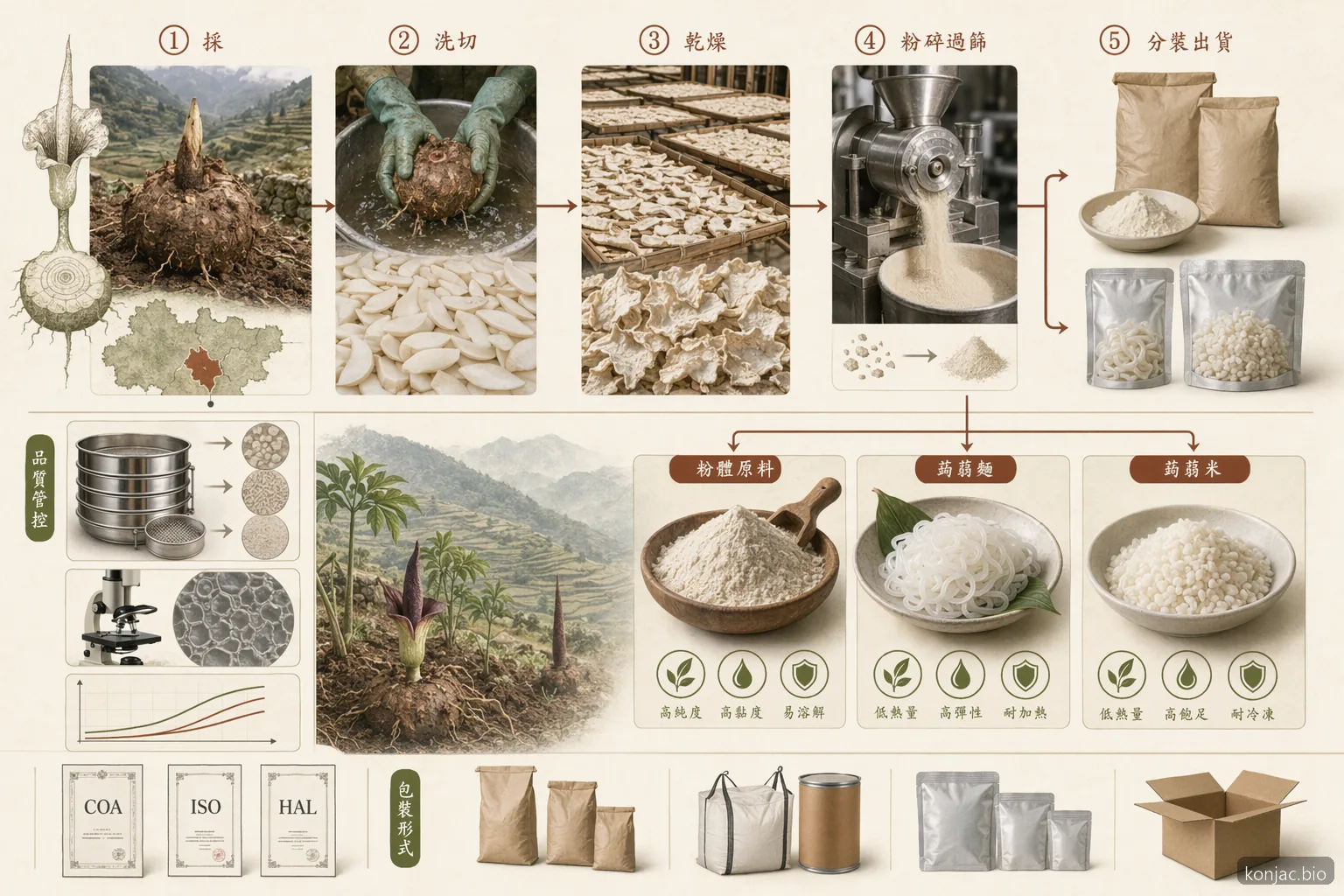
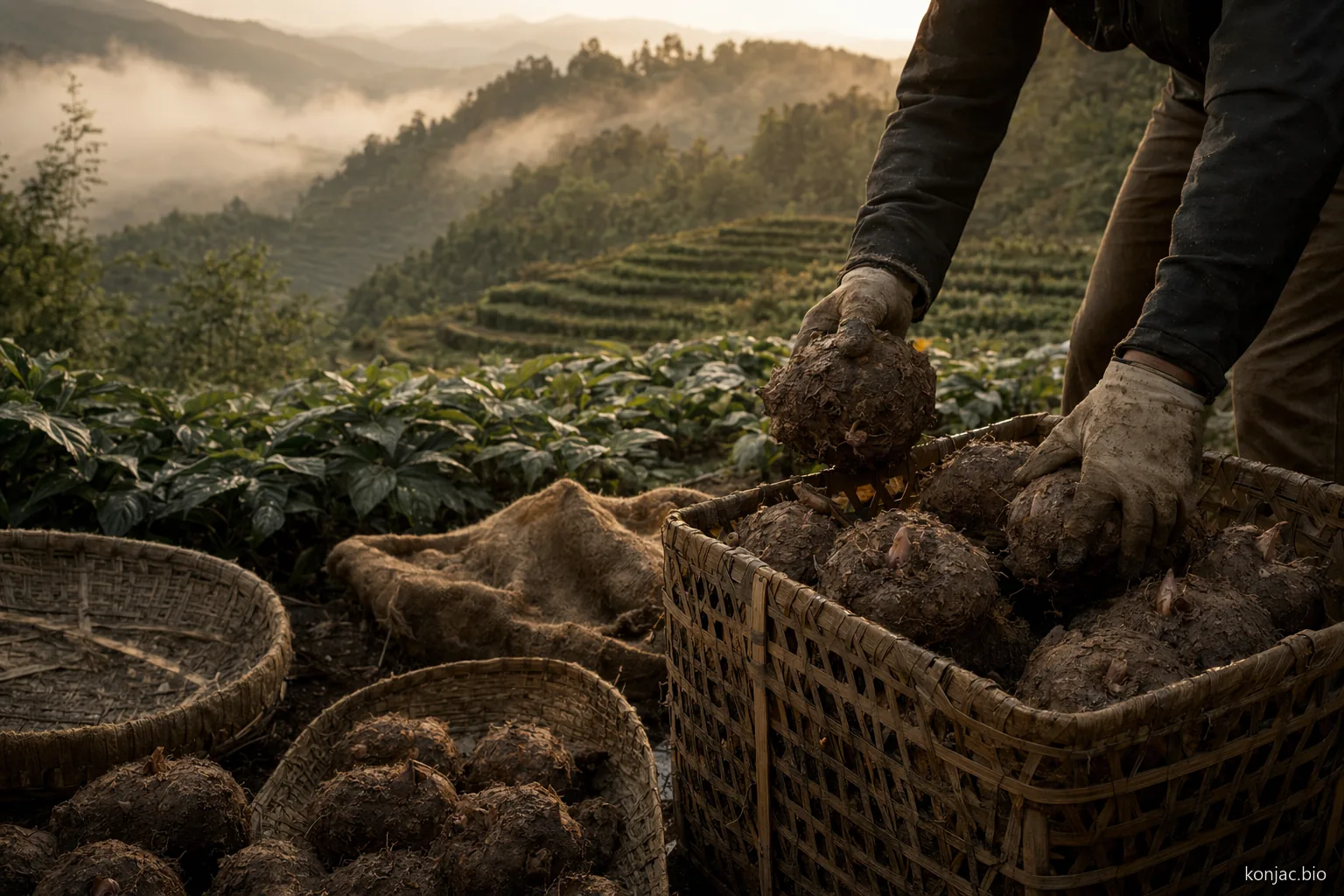
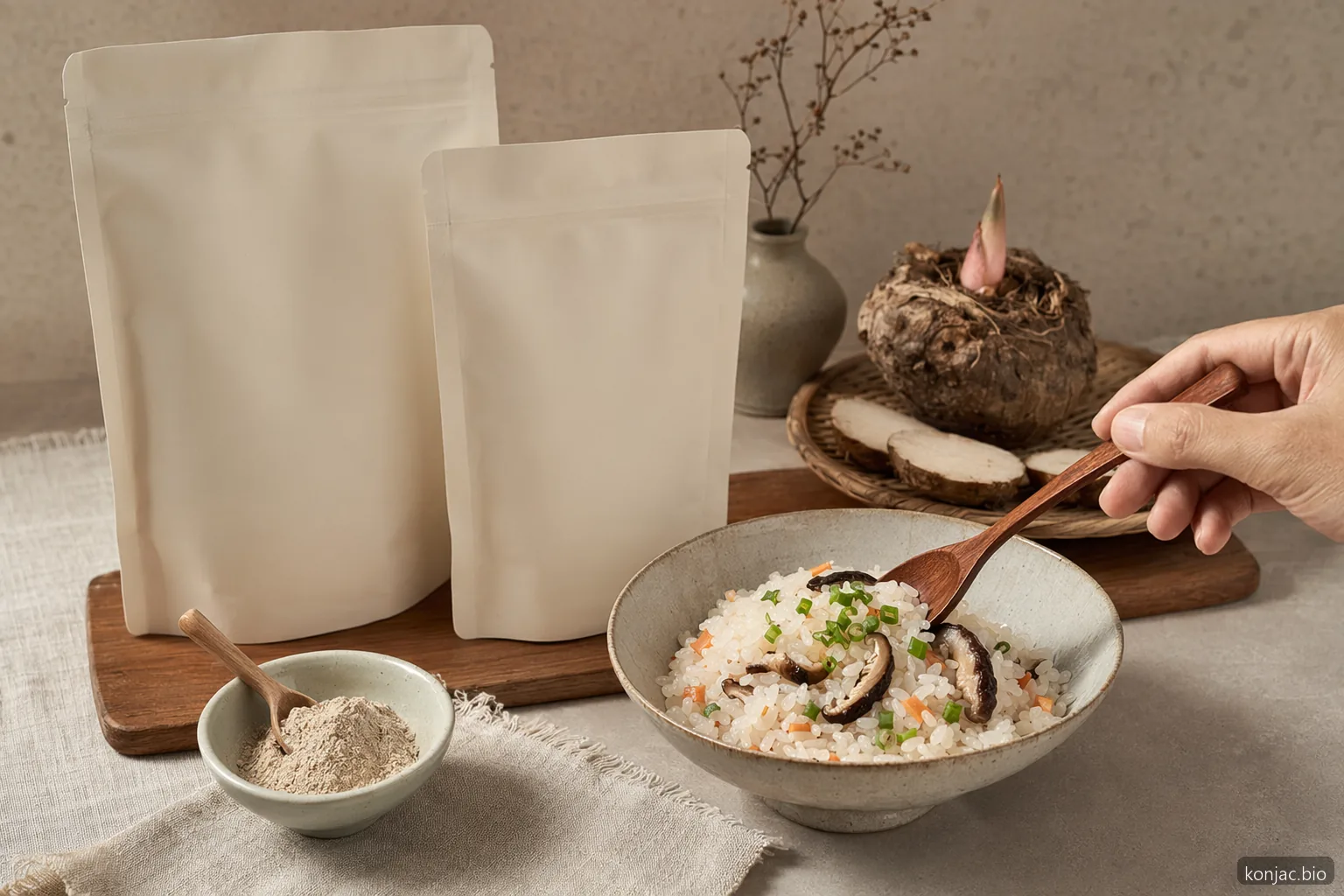
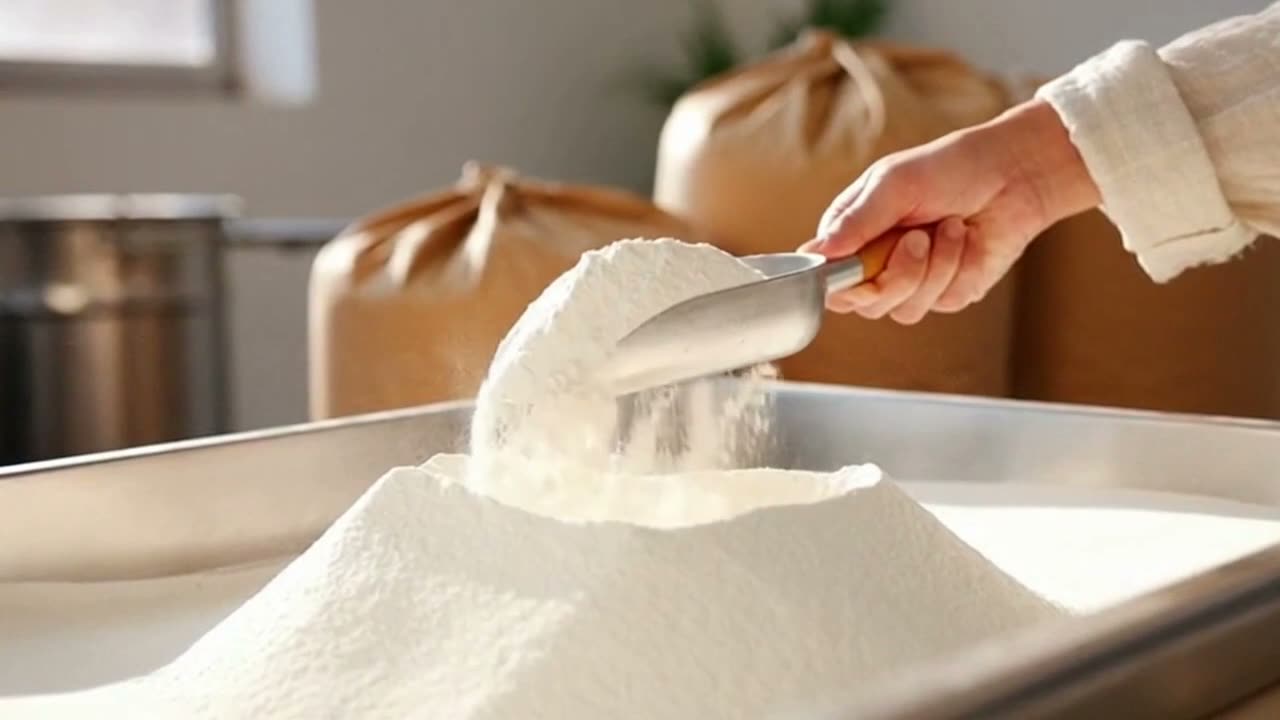
Konjac wholesale includes bulk konjac ingredients, finished shelf-stable foods, frozen or ambient meal components, and private-label products made from the corm of Amorphophallus konjac.
For procurement teams, the term covers two supply chains. The first is ingredient procurement: konjac flour, purified glucomannan powder, and konjac gum E425 for food manufacturing. The second is finished-goods procurement: shirataki noodles, konjac rice, konjac jelly, konjac snacks, and konjac sponge products packed under a buyer's brand.
Konjac is valued because glucomannan is a highly water-binding soluble fiber. The European Food Safety Authority has approved the wording, "Glucomannan in the context of an energy restricted diet contributes to weight loss," under defined conditions of use in a 2010 opinion. Commercial buyers should keep claims, serving size, and label language aligned with the target market rather than copying consumer marketing language across regions.
| Wholesale category | Typical buyer | Common format | Key buying variable |
|---|---|---|---|
| Konjac flour | Food ingredient distributor | 20 kg or 25 kg bags | Viscosity, mesh, purity |
| Glucomannan powder | Supplement or food brand | Drums, cartons, sachets | Assay, hydration, label claim |
| Konjac gum E425 | Food manufacturer | Food additive bags | Regulatory status, gel strength |
| Bulk shirataki | Retail or meal brand | Pouches, trays, foodservice bags | Net weight, drained weight, shelf life |
| OEM konjac foods | Brand owner | Private-label retail packs | MOQ, artwork, formula control |
Buyers new to konjac often start with one product, then expand into adjacent formats. A noodle brand may add konjac rice, while a supplement brand may move from glucomannan capsules into drink powders or satiety-focused blends.
How do buyers specify konjac wholesale ingredients?
Buyers specify konjac wholesale ingredients by defining product grade, glucomannan content, viscosity, mesh size, moisture, ash, microbiology, packaging, certificates, and intended application.
A vague request such as "send konjac powder price" usually leads to inconsistent quotes. A useful RFQ states the target product, the application, the annual volume, and the testing standard expected for each batch. For example, a beverage powder needs different hydration behavior than a noodle factory using alkaline gel formation.
Konjac flour is not always the same as purified glucomannan powder. In trade, konjac flour can refer to milled and refined corm powder, while glucomannan powder usually signals a higher-purity soluble fiber fraction. The konjac flour category also overlaps with food additive konjac gum, which is listed in the European Union food additive framework as E425 under Regulation 1333.
| Specification | Why it matters | What to request |
|---|---|---|
| Glucomannan content | Controls fiber level and function | Assay method and COA result |
| Viscosity | Affects thickening, satiety texture, noodle gel | Method, concentration, temperature |
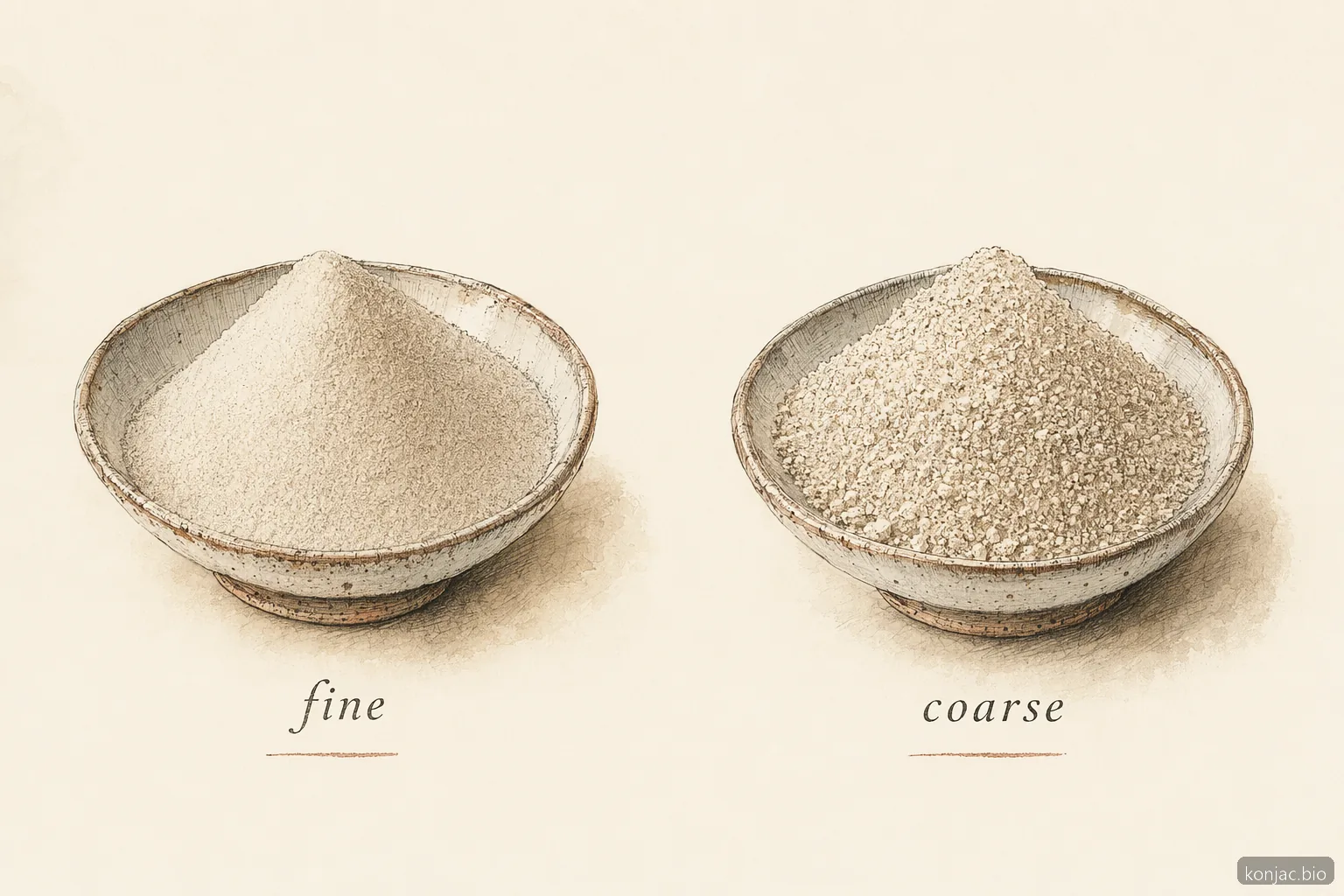
| Mesh size | Changes hydration speed and mouthfeel | 80, 100, 120 mesh or custom |
| Moisture | Impacts flow and storage stability | Batch result and limit |
| Ash | Signals mineral residue and refinement level | Batch result and limit |
| Microbiology | Supports food safety review | TPC, yeast, mold, coliforms, pathogens |
For supplement buyers, the specification should also include serving size, fiber declaration, and any allergen or vegan requirements. For food factories, the specification should include processing pH, heating step, hydration time, and compatibility with calcium hydroxide, sodium carbonate, or other permitted processing aids in the target jurisdiction.
Konjac.bio supports wholesale, private-label, and OEM sourcing conversations for ingredient and finished-product buyers. For MOQ, specification, or supplier-matching requests, use the contact form with target product, market, and annual volume.
Which konjac noodle ingredients matter for bulk shirataki?
Konjac noodle ingredients usually include water, konjac flour or glucomannan, and a food-grade alkaline coagulant such as calcium hydroxide, with optional oat fiber, soy fiber, seaweed, spices, or vegetable color depending on the product.
For bulk shirataki, the ingredient list is a commercial decision as much as a formulation decision. Simple ingredient decks are easier for clean-label retail, while added fibers can improve bite, reduce odor, change opacity, or create regional product styles. Buyers sourcing shirataki noodle bulk should request both the ingredient declaration and the process flow, because the same label can hide different textures, drained weights, and shelf lives.
The core process is hydration, mixing, alkaline gel setting, forming, washing, packing, and heat processing. The high water content means shipping economics are different from dry pasta. A 200 g retail pouch may contain a large water fraction, so freight cost per gram of fiber can be high compared with dry konjac flour.
| Bulk shirataki variable | Commercial impact | Question for supplier |
|---|---|---|
| Net weight | Retail price comparison | Is the label based on net or drained weight? |
| Drained weight | True edible yield | What is the tested drained weight range? |
| Pack liquid | Odor and shelf stability | What is the pH and fill liquid formula? |
| Shape | Menu fit | Spaghetti, fettuccine, angel hair, rice, blocks? |
| Texture | Repeat purchase | What gel strength or bite target is used? |
| Shelf life | Distributor acceptance | Ambient, chilled, or frozen supply chain? |
Buyers searching for bulk shirataki, shirataki noodle bulk, or konjac noodle bulk are usually comparing the same supply base. The quote should separate tooling, artwork, cartons, inner pouches, lab testing, and unit price, because each element affects landed cost.
Konjac noodle ingredients also affect claims. A plain konjac noodle may be very low in available carbohydrate, but added starches, oat fiber systems, sauces, or flavor sachets can change the nutrition panel. Brands positioning products for low-carb shoppers should verify finished-goods nutrition with a qualified laboratory rather than relying only on a supplier estimate.
What certifications should a konjac wholesale supplier hold?
A konjac wholesale supplier should hold a recognized food safety system, documented HACCP controls, batch traceability, and market-specific documents such as Kosher, Halal, allergen statements, organic certificates, or non-GMO declarations when required.
ISO 22000 is a food safety management system standard covering organizations in the food chain, and the current ISO page describes it as applicable to food producers, processors, and service providers using a management-system approach to food safety ISO 22000. HACCP is also central, with Codex guidance describing hazard analysis and critical control points in the General Principles of Food Hygiene Codex HACCP.
Certificates do not replace product testing. A supplier can hold ISO 22000 and still ship a batch that fails viscosity, microbiology, or labeling expectations. The best procurement files contain both system-level documents and lot-level documents.
| Document | Best for | Buyer action |
|---|---|---|
| ISO 22000 or FSSC 22000 | Food safety management | Check certificate scope and expiry |
| HACCP plan summary | Process risk control | Confirm CCPs for drying, packing, heat steps |
| COA | Batch quality | Match lot number to invoice and label |
| Allergen statement | Retail and foodservice labels | Check shared-line risks |
| Kosher and Halal | Market access | Confirm certifier, product name, facility |
| Organic certificate | Organic claims | Confirm operator, product, and standard |
For United States imports, buyers should understand the Food Safety Modernization Act framework. FDA's preventive controls rule describes hazard analysis, risk-based preventive controls, supply-chain programs, and related requirements for human food facilities under FSMA controls.
For European Union buyers, confirm that additive use, naming, and maximum-use conditions fit the specific product category. E425 is not a universal shortcut for every konjac-containing food, and finished-food labeling should be reviewed by a qualified regulatory professional in the launch market.
Sourcing pathways for konjac flour, OEM foods, and private label
Most konjac sourcing projects follow one of four pathways: raw ingredient purchase, co-manufacturing with a buyer-owned formula, private-label selection from a supplier catalog, or full OEM development from concept to packed product.
Raw ingredient purchase is the most flexible route for manufacturers that already have R&D, QA, and packing capability. The buyer imports konjac flour, glucomannan, or konjac gum, then uses internal processing to make noodles, bakery systems, beverages, sauces, or supplements. This route gives the buyer more control over formula and margin, but it also requires internal technical capability.
Private label is faster. A factory already makes a standard shirataki noodle, konjac rice, jelly, or sponge, and the buyer adds brand artwork, carton configuration, and market-specific labels. The tradeoff is less formula control and a higher risk that competitors sell a similar item.
OEM development is best when the brand needs a distinct texture, flavor, shape, claim set, or pack format. For example, a buyer may request shelf-stable konjac rice with lower pack odor, a noodle for foodservice ramen bowls, or a jelly format that avoids mini-cup risks. OEM projects often require pilot trials, stability checks, artwork review, and one or more paid production tests.
- Ingredient route: Best for factories and advanced formulators using bulk powder.
- Co-manufacturing route: Best for brands with a proprietary formula but no plant.
- Private-label route: Best for faster retail launch using existing SKUs.
- OEM route: Best for differentiated products, custom claims, or custom packaging.
Ingredient buyers should study konjac plant basics and konjac flour specifications before sending RFQs. Finished-food buyers should compare shirataki noodles, konjac rice, and konjac jelly because each category has different safety, freight, and shelf-life economics.
Product teams should also decide who owns the formula. If the supplier owns the formula, switching factories later may require a new sensory profile and new nutrition testing. If the buyer owns the formula, the purchase contract should define confidentiality, test methods, and permitted substitutions.
How should brands compare MOQ, lead time, and price?
Brands should compare MOQ, lead time, and price by converting every quote into landed cost per sellable unit, then checking whether the minimum order fits cash flow, shelf life, and forecasted sales velocity.
MOQ varies by product and packaging. Bulk konjac flour may be quoted by metric ton, while private-label shirataki may be quoted by production run, pouch count, or container fill. A low unit price can be misleading if the MOQ forces six months of inventory into a warehouse with uncertain sell-through.
Lead time has at least five parts: sample preparation, label and artwork approval, raw material reservation, production slot, and freight. Ocean freight may lower cost but adds planning time. Air freight is rarely attractive for water-packed konjac noodles because the product is heavy relative to its retail value.
| Cost item | Ingredient order | Finished-goods order |
|---|---|---|
| Base unit price | Per kg powder | Per pouch, cup, tray, or carton |
| Packaging | Bag, liner, pallet | Pouch, label, carton, display case |
| Testing | COA plus buyer lab | Nutrition, microbiology, stability |
| Freight | Dense and efficient | Higher for water-packed goods |
| Duties and clearance | HS-code dependent | HS-code and retail-pack dependent |
| Waste allowance | Low if dry and sealed | Higher if damage, leakage, or expiry occurs |
A practical RFQ asks for price breaks at three volumes. For example, request 500 kg, 1,000 kg, and 5,000 kg for powder, or 10,000, 30,000, and 100,000 units for retail pouches. Ask suppliers to quote the same Incoterm, because EXW, FOB, CIF, and DDP prices are not directly comparable.
Brands should calculate landed cost with a simple formula: product cost plus packaging plus testing plus freight plus insurance plus duty plus customs broker fees plus domestic warehousing. The result should be divided by sellable units, not produced units, because leakage, damage, samples, and retailer deductions can reduce sellable inventory.
What quality tests should buyers request for konjac wholesale?
Buyers should request identity, purity, viscosity, moisture, ash, particle size, microbiology, heavy metals, pesticide screening when relevant, and finished-product nutrition or shelf-life testing for konjac wholesale orders.
Konjac powder quality is functional. Two samples may look similar but perform differently in hydration, gel strength, noodle bite, or beverage thickness. Viscosity methods should name concentration, temperature, hydration time, spindle, and instrument because results can change with method.
Finished foods require a different test package. For shirataki noodles and konjac rice, buyers need drained weight, pH, seal integrity, microbiology, shelf-life data, and nutrition. For konjac jelly, buyers should add texture, serving size, packaging geometry, warning language, and choking-risk review, especially where small cups or suction-style packs are involved.
| Product | Minimum quality file | Extra checks |
|---|---|---|
| Konjac flour | COA, viscosity, mesh, moisture, ash, microbiology | Heavy metals, pesticides, residual sulfur if used |
| Glucomannan powder | Assay, viscosity, soluble fiber, microbiology | Serving-size support, contaminant panel |
| Konjac gum E425 | Additive specification, COA, regulatory statement | Application test in target formula |
| Shirataki noodles | pH, microbiology, drained weight, shelf life | Seal test, sensory retention, carton drop test |
| Konjac jelly | pH, texture, microbiology, label review | Choking-risk review and market-specific warnings |
For nutrition and claim support, use accredited third-party laboratories when entering major retail or online marketplaces. Supplier nutrition panels are useful for estimates, but a buyer-owned lab report is stronger for label files and retailer onboarding.
Sampling should include retention samples. A basic program keeps one sealed sample from pre-shipment approval and one sealed sample from the commercial batch. If a dispute arises about viscosity, odor, leakage, or label mismatch, retained samples give both sides a factual reference point.
How should importers manage safety, labeling, and compliance?
Importers should manage safety, labeling, and compliance by reviewing the formula, process, packaging, claims, certificates, and target-market rules before production rather than after goods arrive.
Konjac is used in several regulated contexts: food ingredient, food additive, finished food, supplement ingredient, and cosmetic accessory. The correct path depends on the product. A konjac sponge is not reviewed like a noodle, and a glucomannan capsule is not labeled like a water-packed pasta substitute.
Konjac jelly deserves special attention. FDA has described serious choking concerns for certain mini-cup gel candies containing konjac, especially when the product shape and gel properties make it difficult to dislodge, in a compliance policy guide on konjac candy. Buyers should avoid assuming that any jelly format is acceptable simply because konjac is widely eaten in other forms.
Claims also require discipline. The EFSA-approved glucomannan wording is tied to defined use conditions, including daily intake and an energy-restricted diet context in the EFSA claim. In other markets, structure and function language, nutrition content claims, and advertising standards may differ.
- Before sampling: Confirm target country, product category, and forbidden ingredients.
- Before artwork: Verify name, net quantity, nutrition panel, allergens, origin, claims, and warnings.
- Before production: Approve formula, specification, packaging, test plan, and retention samples.
- Before shipment: Match COA, invoice, packing list, lot codes, and certificate names.
- After arrival: Inspect cartons, leakage, labels, shelf life, and random samples.
Brands that build compliance into the sourcing timeline reduce relabeling, detention, retailer rejection, and chargeback risk. The lowest purchase price is rarely the lowest commercial cost if documentation is incomplete or the product misses a market rule.
Frequently asked questions
01 What is the difference between konjac flour and glucomannan powder in wholesale trade?
02 What MOQ should I expect for konjac wholesale orders?
03 Can I buy shirataki noodle bulk for foodservice or repacking?
04 What are typical konjac noodle ingredients?
05 What does konjac shuang ingredients mean?
06 Which certifications matter most when sourcing konjac wholesale?
07 Is konjac gum E425 the same as konjac flour?
08 How should I compare konjac noodle bulk suppliers?
09 Can konjac products be positioned for keto or weight management?
- Scientific Opinion on the substantiation of health claims related to glucomannan and reduction of body weight · EFSA · 2010
- ISO 22000 Food safety management systems · ISO · 2018
- Food Safety Modernization Act Final Rule for Preventive Controls for Human Food · FDA · 2024
- Candy Products Containing Konjac Gel · FDA · 2002
- General Principles of Food Hygiene · Codex Alimentarius · 2023
- Regulation on food additives, Regulation 1333/2008 · EUR-Lex · 2024
- Amorphophallus konjac taxon record · Kew Science · 2024