What is bulk shirataki for food brands?
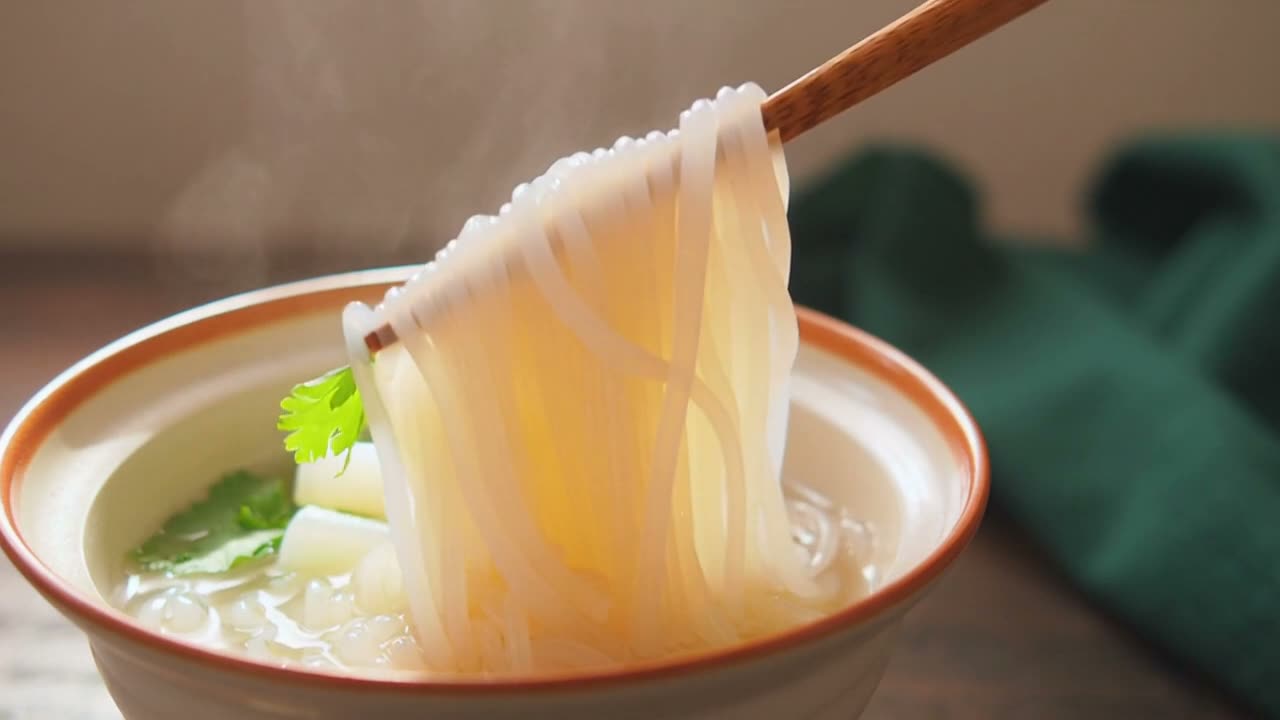
Bulk shirataki is wholesale konjac noodle inventory sold in large commercial volumes for private-label retail, foodservice, meal kits, and ingredient distribution.
Shirataki is commonly made from water, konjac flour, and an alkaline setting agent such as calcium hydroxide. The key functional ingredient is glucomannan, a soluble dietary fiber from the corm of Amorphophallus konjac, a plant documented in food and nutrition literature for its high water-binding capacity and gel formation behavior through konjac glucomannan.
For a brand, the word “bulk” can mean three different buying models:
- Bulk finished goods: retail-ready pouches packed under a buyer’s brand.
- Bulk foodservice: larger bags or tubs for restaurants, commissaries, and meal-prep operators.
- Bulk ingredients: shirataki blocks, knots, rice shapes, or noodle nests supplied for repacking or recipe assembly.
Most shirataki is wet-packed because konjac gel performs best when hydrated. Dry konjac noodle formats exist, but classic shirataki is a hydrated gel noodle with high moisture, neutral flavor, and a springy bite.
For broader procurement planning, see the parent guide Konjac Wholesale & Manufacturing, which covers supplier evaluation, documentation, and wholesale konjac product categories.

How is bulk shirataki made at manufacturing scale?
Bulk shirataki is made by hydrating konjac flour, forming a glucomannan gel, cutting or extruding it into noodle shapes, then packing it in alkaline water or brine.
A typical production flow has 7 steps:
- Raw material control: konjac flour is checked for viscosity, particle size, odor, moisture, and whiteness.
- Hydration: flour is dispersed in water so glucomannan can swell and thicken.
- Gel setting: an alkaline agent supports irreversible gel structure and noodle firmness.
- Forming: the gel is extruded, cut, knotted, diced, or shaped into rice-style grains.
- Rinsing: noodles are washed to reduce excess alkalinity and control aroma.
- Packing: noodles are sealed with packing liquid in pouches, cups, or larger bags.
- Heat process: sealed packs are processed according to the product’s validated food safety plan.
Konjac glucomannan’s thickening and gelling behavior is why shirataki can contain very few digestible carbohydrates while still having a noodle-like texture. EFSA evaluated glucomannan as a food fiber and approved the EU wording “Glucomannan in the context of an energy restricted diet contributes to weight loss,” under specified daily intake conditions in its EFSA opinion.
Quality differences usually come from flour grade, hydration control, water quality, pH control, cutting precision, and deodorization. A supplier using poor flour may produce noodles with brittle texture, cloudy packing water, strong alkaline odor, or inconsistent drained weight.
Bulk shirataki formats, packaging, and shelf-life options
Bulk shirataki can be specified by noodle shape, pack size, drained weight, packing liquid, and carton configuration.
The most common commercial formats are:
| Format | Typical use | Common pack style |
|---|---|---|
| Angel hair | Diet noodles, stir-fry kits, instant meals | Retail pouch or foodservice bag |
| Spaghetti cut | Pasta alternatives | Retail pouch, tray, or multipack |
| Fettuccine cut | Sauce-heavy recipes | Retail pouch or larger catering bag |
| Rice shape | Grain alternatives, bowls, meal kits | Pouch, cup, or bulk bag |
| Knots or blocks | Hot pot, Asian ready meals, foodservice | Bag, tub, or vacuum pack |
Retail pouches often range from 150 g to 400 g net weight, while foodservice packs can be much larger. Buyers should separate net weight from drained weight because the noodle content, not the packing liquid, drives serving size, recipe yield, and consumer value perception.
Wet-packed shirataki usually relies on sealed packaging, controlled pH, and heat processing for commercial stability. Exact shelf life depends on formulation, process validation, packaging film, storage temperature, and local rules. Many wholesale programs target 9 to 18 months, but a buyer should verify this through a supplier COA, retained samples, and shipping-lane stability checks.
Brands developing adjacent konjac products can compare noodle specifications with konjac noodles wholesale options and raw-material programs such as konjac flour wholesale.
What specifications should buyers check before ordering bulk shirataki?
Buyers should check bulk shirataki specifications for ingredient list, drained weight, pH, texture, odor, microbiology, packaging integrity, and regulatory documents.
A practical purchase specification should include:
- Ingredients: water, konjac flour, and approved setting agent, with any added oat fiber, soy, seaweed, or flavor system declared.
- Noodle dimensions: cut width, length range, shape tolerance, and breakage limit.
- Drained weight: target grams per pack and accepted variance.
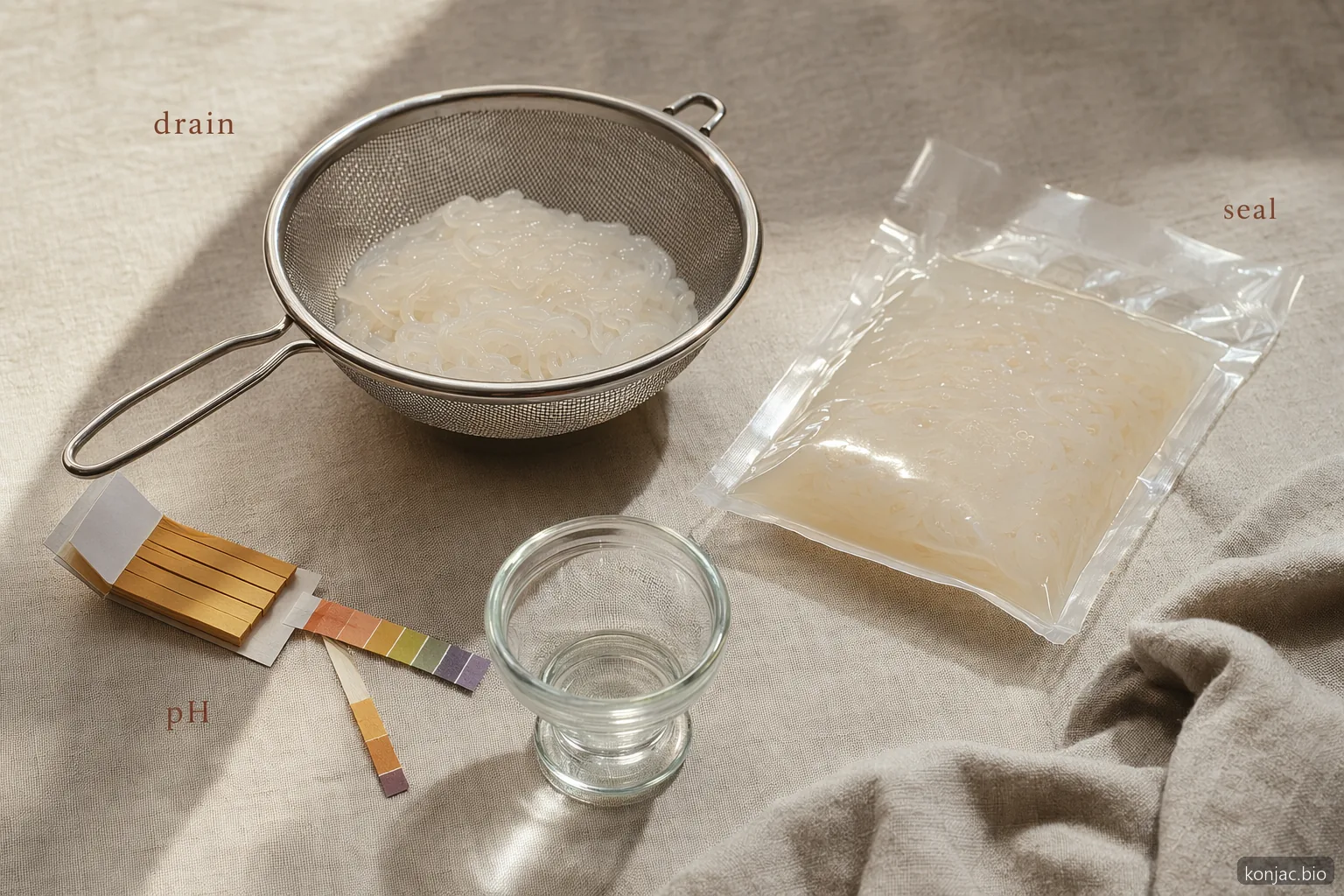
- pH range: measured in packing liquid and finished noodle.
- Texture: firmness target, bite profile, and resistance to mushiness after reheating.
- Odor: acceptable alkaline aroma limit after rinsing.
- Microbiology: total plate count, yeast, mold, coliforms, and pathogen screening where required.
- Packaging: seal strength, leak rate, oxygen barrier, pouch thickness, and carton drop-test results.
- Documents: COA, ingredient statement, allergen statement, nutrition panel data, process flow, HACCP summary, and export certificate where needed.
Food safety systems matter because shirataki is a hydrated food packed in sealed units. Buyers commonly ask suppliers for HACCP plans, ISO 22000 or FSSC 22000 certification, lot traceability, and recall simulation records. ISO 22000 is an international food safety management standard maintained by the ISO standard body.
Konjac.bio sources konjac ingredients and finished konjac formats at wholesale scale for brands building repeatable product lines. For MOQ, lead time, and private-label planning, use the contact form.
Packaging compliance should go beyond the pouch itself. Ask suppliers for food-contact declarations covering pouch film, ink, and adhesive, plus confirmation of GTIN, lot code, and expiry format on the carton. These details matter for warehouse scanning, retail onboarding, and recall traceability, and they are easy to miss when a quote focuses only on unit price.
Regulatory and labeling points for shirataki imports
Shirataki labels should be built around the finished product’s actual ingredients, nutrition data, serving size, country of sale, and allowed claims.
In the United States, a shirataki product entering retail channels generally needs an accurate statement of identity, ingredient list, net quantity, nutrition facts, allergen disclosure when applicable, responsible firm details, and country-of-origin information where required. Nutrition labeling rules are administered by the FDA through the Nutrition Facts framework.
In the European Union, buyer teams should check food information rules, permitted additives, language requirements, nutrition claims, and health-claim wording. Glucomannan claims need careful wording because EFSA’s approved language is conditional, and the claim is tied to a specific daily intake and an energy-restricted diet through the EFSA opinion.
Konjac products also have a history of regulatory attention in mini-cup jelly formats because of choking risk. That issue is not the same as wet-packed shirataki noodles, but it shows why shape, gel firmness, serving form, and warning language should be reviewed for each finished konjac product. FDA has warned consumers about mini-cup jelly products containing konjac in a choking warning.
Private-label buyers should approve final artwork only after legal review in the destination market. “Zero calorie,” “low carb,” “keto,” “high fiber,” “gluten-free,” and weight-management claims may require defined thresholds, substantiation, or exact wording.
United States buyers should also confirm that the supplier's facility and importer program align with the FDA Food Safety Modernization Act preventive-controls framework for human food, which sets requirements for hazard analysis, supplier verification, and recordkeeping. This applies whether the purchase is framed as bulk shirataki, konjac noodle bulk, or shirataki noodle bulk; the labeling and FSMA obligations follow the product, not the search term used to source it.
Frequently asked questions
01 What is the usual MOQ for bulk shirataki?
02 Is bulk shirataki the same as konjac noodles?
03 Does shirataki need refrigeration during shipping?
04 What documents should a bulk shirataki supplier provide?
05 Can bulk shirataki be labeled as gluten-free or keto?
06 Why does shirataki sometimes have an alkaline smell?
07 How should buyers compare samples from different shirataki suppliers?
- Scientific Opinion on the substantiation of health claims related to glucomannan · EFSA · 2010
- Konjac Glucomannan: From Molecular Architecture to Translational Applications. A Critical Review of Structure-Function Relationships, Emerging Biomedical Frontiers, and Industrial Challenges · Foods (PubMed) · 2026
- How to Understand and Use the Nutrition Facts Label · U.S. Food and Drug Administration · 2024
- ISO 22000 Food safety management · International Organization for Standardization · 2018
- Import Alert 33-15: Detention Without Physical Examination of Gel Candies Containing Konjac · U.S. Food and Drug Administration · 2024
- FSMA Final Rule for Human Food · FDA