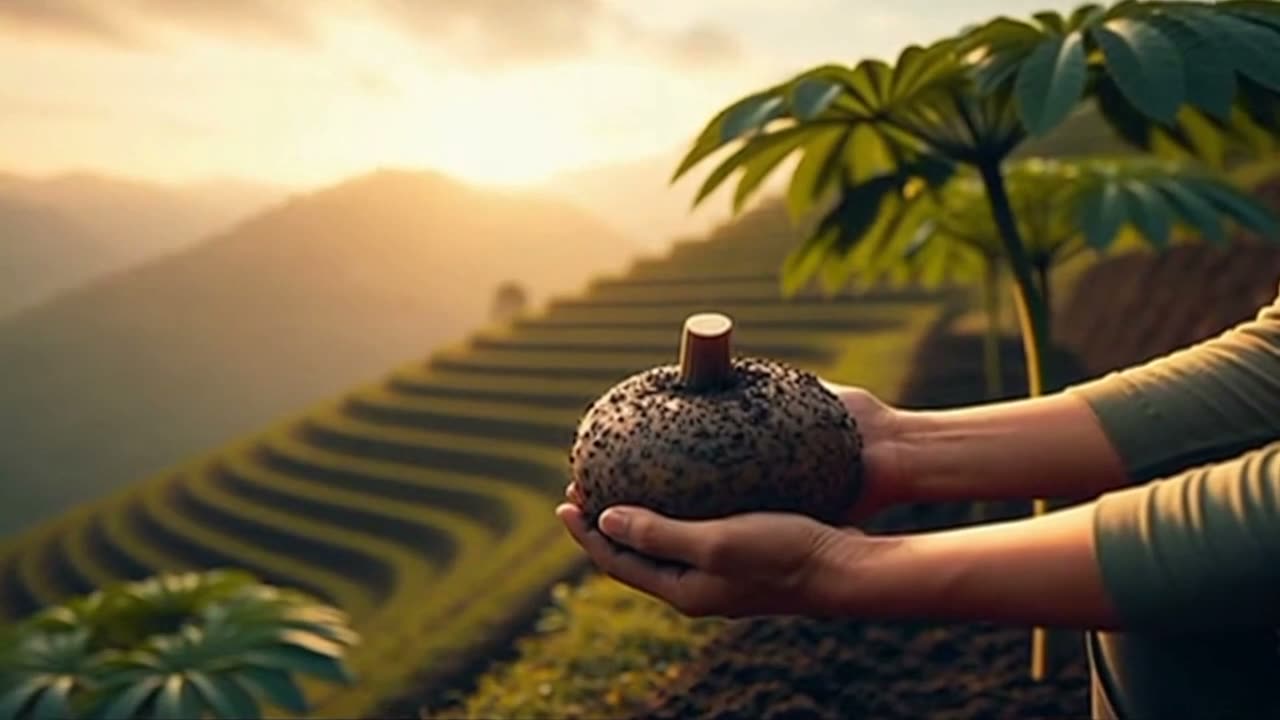
Konjac ingredients and finished products, sourced from China
Konjac glucomannan, konjac flour and gum, shirataki noodles and rice, konjac jelly and sponges, sourced from vetted producers in China's konjac regions and shipped to your specification. konjac.bio is our reference site.
- Glucomannan
- Konjac flour & gum
- Shirataki & rice
- Jelly
- Sponge
- Wholesale
A Shanghai trading company that sources konjac for other people's brands, and writes down what it learns.
What konjac is A perennial root crop, Amorphophallus konjac. The underground corm is milled into konjac flour and refined into konjac glucomannan, a water-soluble fibre that swells many times its own weight when hydrated.
What we trade Glucomannan powder, konjac flour and gum (E425), shirataki noodles and konjac rice, konjac jelly and konjac sponges, in food, supplement and bulk grades, for brands, importers and manufacturers.
How we work We source from vetted producers in Yunnan, Hubei, Sichuan, Guizhou and Shaanxi, consolidate, check each lot against your specification, and arrange export. Producer documents are passed through unchanged.
What we do not do We are not a manufacturer and we claim no certificates. We do not sell to consumers and we do not give medical advice. Where the evidence is thin we say so.
The seven pillars
Konjac is a plant. Its corm becomes flour, fiber, food, supplement, and skincare. Pick a pillar to start.
Konjac, the plant
The root crop behind every product on this site. Botany, the corm, the powder, the fiber.
Shirataki noodles
Low-calorie konjac pasta. How it is made, how it tastes, brands compared, where to buy.
Glucomannan
The fiber behind the EFSA weight and cholesterol claims.
Konjac jelly
Konnyaku, fruit jellies, and choking-hazard rules.
Konjac sponge
Plant-fiber face sponges, how they work, who they help.
Recipes
Cooking shirataki, konnyaku, and konjac rice without the rubbery aftertaste.
Wholesale & sourcing
COAs, MOQs, supply-chain notes for brands building konjac-based products.
What you can source through Konjac Bio Limited
Konjac (Amorphophallus konjac, per the NCBI taxonomy database) is a plant grown in China. We source konjac ingredients and finished goods from vetted producers there and check each order against your specification.
- Konjac glucomannan: purified soluble fibre powder for food and beverage use.
- Konjac flour: ground corm for food manufacturing.
- Konjac gum (E425): a food ingredient used for texture and viscosity.
- Shirataki and konjac noodles and konjac rice: finished food formats.
- Konjac jelly: a finished food product.
- Konjac sponges: a finished non-food product made from konjac fibre.
How sourcing with us works
- Send your specification: product, grade, volume, destination country and packaging.
- We match it to vetted producers in China's konjac-growing regions and check the spec.
- We arrange samples where relevant and confirm pricing FOB or CIF a China port.
- We consolidate the order, arrange export documents and freight, and pass the producer's own documents through to you unchanged.
About the articles on konjac.bio
The pillar pages on konjac.bio cover konjac as a plant and as a food and non-food ingredient: konjac, glucomannan, konjac flour, konjac gum, shirataki noodles, konjac rice, konjac jelly, konjac sponges, konjac wholesale and konjac cultivation.
We check every source before publishing and remove any we cannot verify; when a citation does not support the statement next to it, we correct or remove it. See about for our editorial policy.
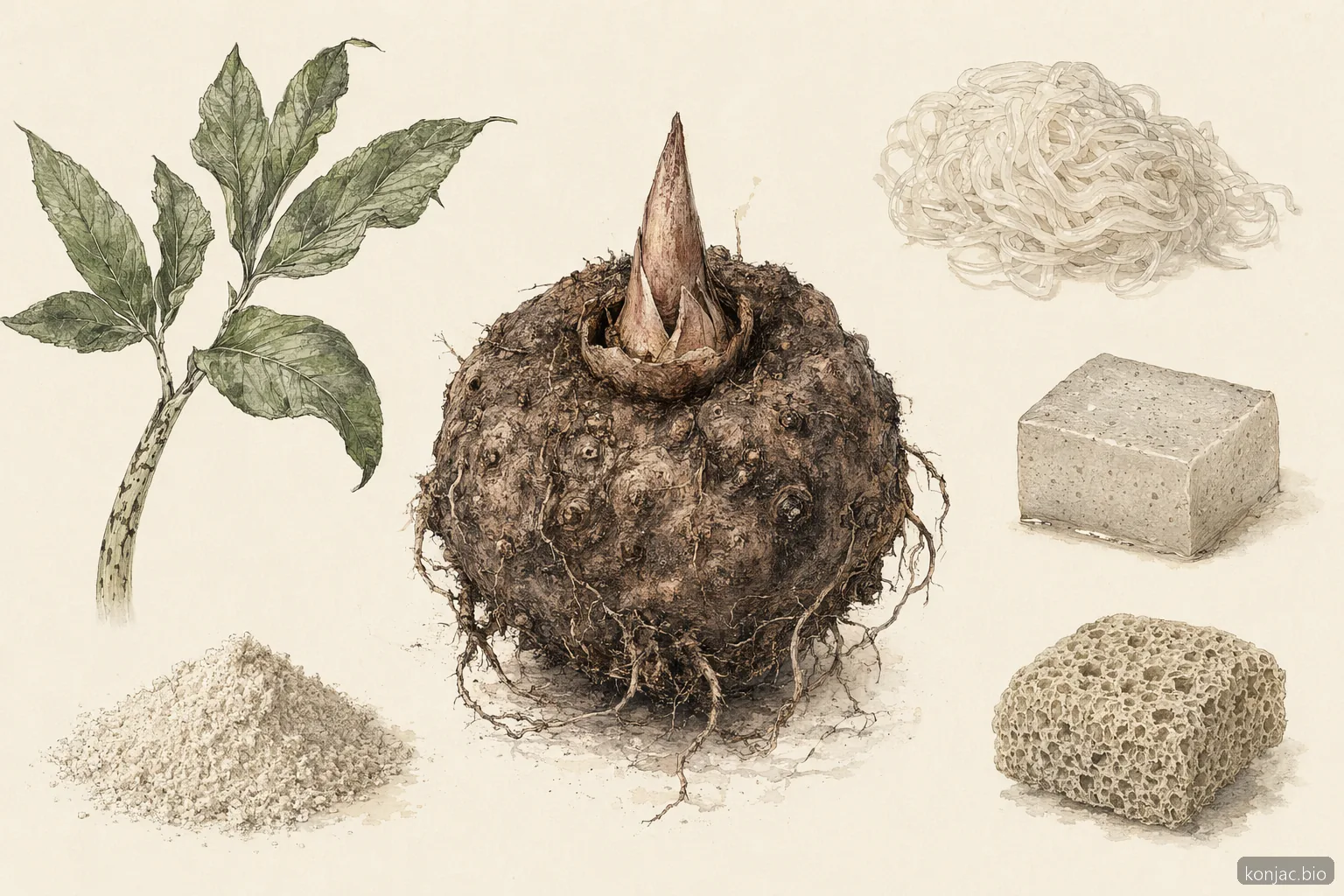
We source the konjac behind other people's brands.
Food-grade konjac flour. Supplement-grade konjac glucomannan. Finished shirataki, rice, jelly and sponges. Particle size, viscosity, moisture, sulphur dioxide residue and microbial counts are agreed on paper before the first kilogram ships.
- Terms FOB or CIF, China port
- Quantities Trial lots to container loads
- Grades Food, supplement, bulk
- Documents Producer spec sheet and COA, per lot
Questions buyers ask
01 What is konjac?
02 Is glucomannan the same as konjac?
03 What are shirataki noodles made from?
04 Are you a manufacturer?
05 Do you sell to consumers?
06 What do I send to start a sourcing inquiry?
Regulatory and safety statements across this site are checked against the same handful of public sources. They are worth reading directly.
- FDA GRAS Notice Inventory US regulatory status of konjac flour and konjac glucomannan as a food ingredient.
- EFSA opinion on glucomannan health claims The authorised EU wording and its conditions of use, for brands writing labels.
- USDA FoodData Central Nutrient composition for shirataki, konjac flour, and comparison foods.
- PubMed The trials and reviews cited page by page across the site.
- Kew Plants of the World Online Botany and native range for Amorphophallus konjac.
Tell us what you need to source
Share the product, grade, volume and destination and we will help you shape a clear sourcing brief.
We sell konjac to brands, so we know what brands actually need to know. The pages on this site are what we wish someone had told us before our first container.