What is konjac boba?
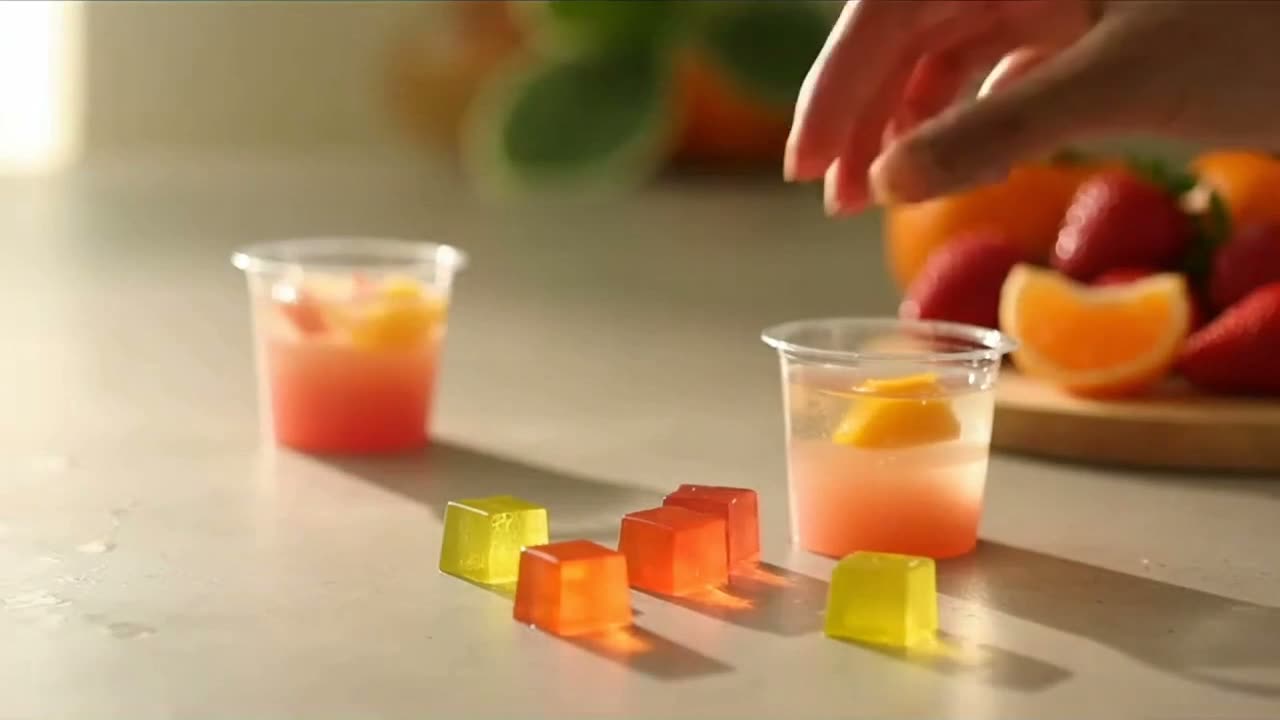
Konjac boba is a chewy pearl made by gelling konjac glucomannan into small spheres for drinks, dessert cups, and snack packs.
The key ingredient is konjac glucomannan, a water-soluble dietary fiber from Amorphophallus konjac, reviewed for its food and nutrition properties in PubMed review. In boba applications, that fiber is hydrated, structured into pearls, and usually packed in sweetened syrup or flavored liquid.
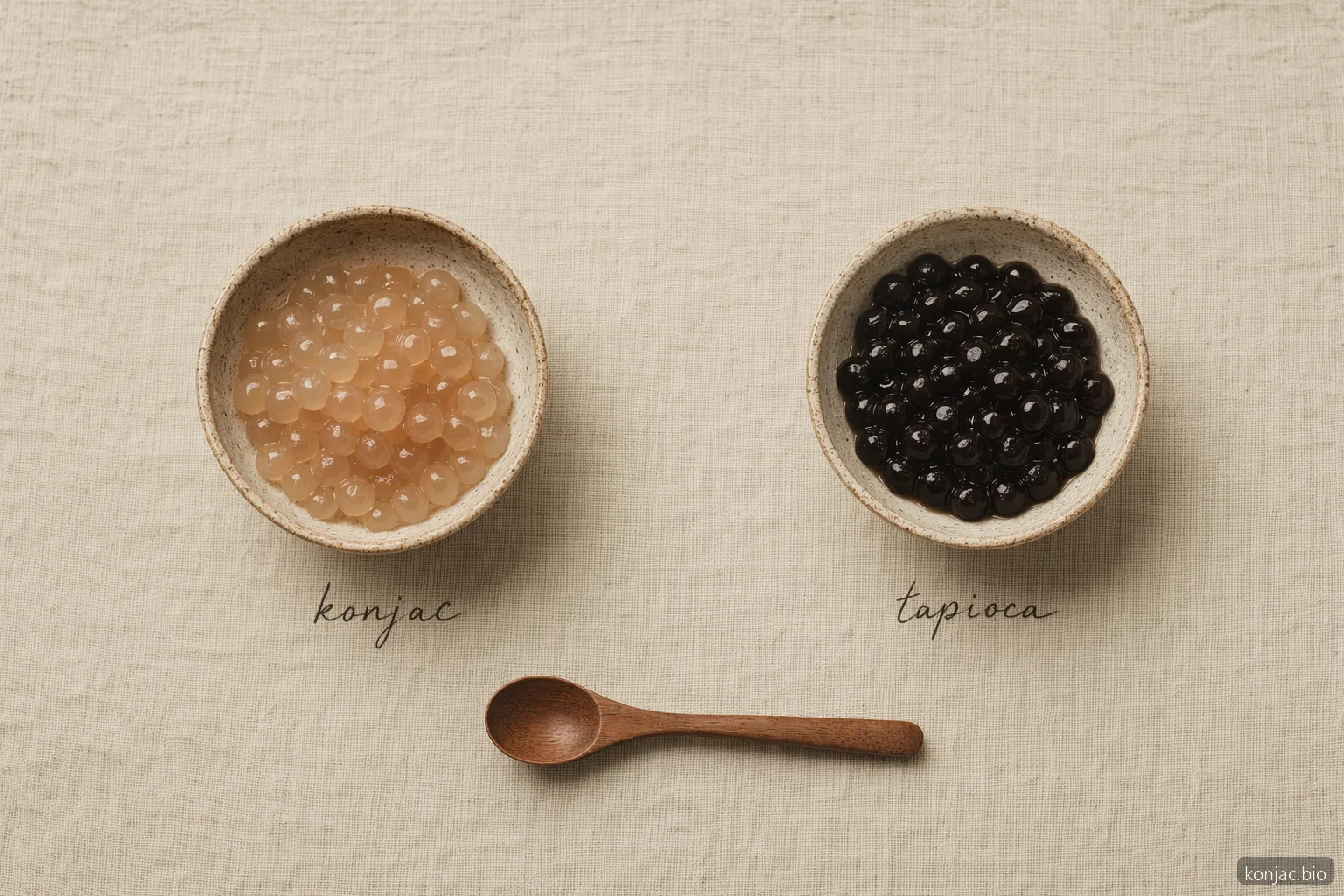
Konjac boba is not the same as tapioca boba. Tapioca pearls are starch-based and become soft-chewy after cooking. Konjac pearls are gel-based, so they can be sold ready-to-eat, chilled, shelf-stable, or aseptically packed depending on formulation and process.
Konjac boba also differs from popping boba. Popping boba has a thin gel skin and liquid center, while konjac boba is typically a solid or semi-solid chewy pearl. This makes it better suited for milk tea, fruit tea, yogurt cups, jelly cups, and spoonable snack formats where a steady bite matters.
How is konjac boba made?
Konjac boba is made by hydrating konjac powder, forming small droplets or pearls, setting the gel, then packing the pearls in syrup or flavored liquid.
A typical manufacturing flow has five steps:
- Hydration: Konjac powder is dispersed in water under high shear to reduce clumps.
- Blending: Sugar, sweetener, flavor, acid, color, or fruit components are added depending on the product brief.
- Gel setting: The hydrated mix is formed into pearls and set with an alkaline or mineral-assisted process.
- Rinsing and sizing: Pearls are washed, screened, and sorted for diameter consistency.
- Packing: Finished pearls are filled into syrup, tea base, juice base, or dessert cups.
Finished pearl size often sits in the 3 to 8 mm range for beverages and dessert cups. Smaller pearls are easier to sip through wide straws, while larger pearls give a more pronounced chew in spoonable snacks.
Formula choices change the bite. More konjac can create a firmer chew, while added gums can improve suspension or reduce syneresis, which is the release of water from a gel. Acid level matters too because fruit teas and citrus flavors need a stable texture across storage.
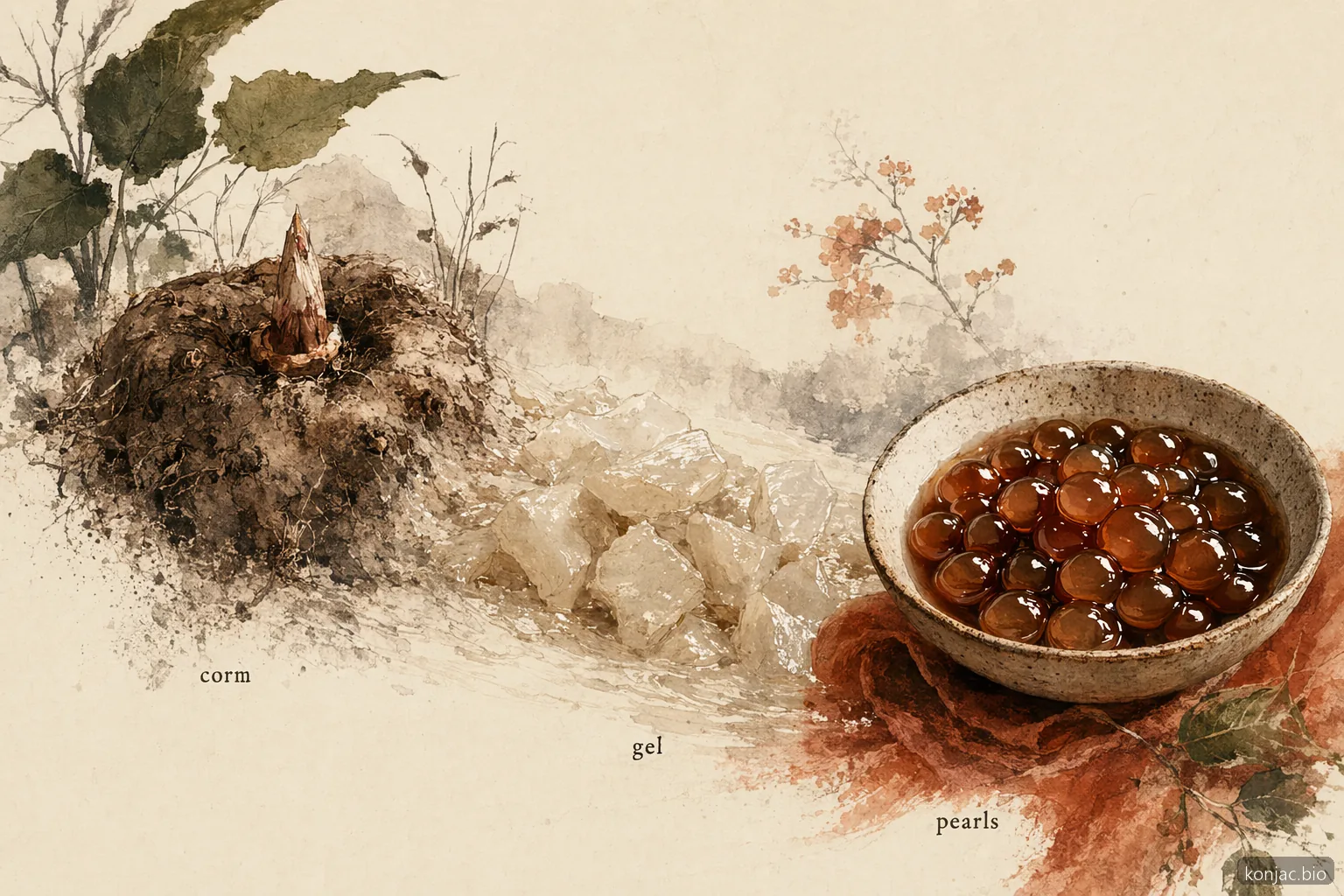
konjac boba vs tapioca boba: texture, calories, and use
Konjac boba and tapioca boba are both chewy drink inclusions, but they behave differently in production, storage, and nutrition positioning.
Tapioca boba is usually cooked from tapioca starch before service. Dry tapioca pearls are mostly carbohydrate and are listed at 358 kcal per 100 g in USDA data. Konjac boba is generally sold pre-hydrated in liquid, so its finished nutrition depends heavily on syrup level, sweetener system, and serving size.
| Attribute | Konjac boba | Tapioca boba |
|---|---|---|
| Main structure | Konjac glucomannan gel | Tapioca starch gel |
| Typical prep | Ready-to-eat or rinse-and-use | Cook, steep, and sweeten |
| Texture | Springy, elastic, jelly-like | Soft-chewy, starchy, warm-service friendly |
| Best fit | RTD teas, dessert cups, chilled snacks | Fresh bubble tea and hot holding |
| Nutrition positioning | Low-sugar or fiber-forward possible | Starch-forward and syrup-dependent |
The better choice depends on the product format. A bubble tea shop may prefer tapioca for fresh-cooked aroma and warmth. A packaged beverage brand may prefer konjac boba because the pearls can be standardized, packed, and distributed with less back-of-house cooking.
Flavor release is another difference. Tapioca pearls absorb brown sugar syrup well after cooking. Konjac pearls are often formulated with flavor already in the packing syrup, so the eating experience is cleaner, lighter, and more consistent across a cold chain or ambient snack line.
Serving pairings and menu ideas for konjac boba
Konjac boba pearls work best with a base that has enough flavor intensity to carry a clean, neutral pearl. Common pairings include green tea with lychee pearls, black tea with brown sugar pearls, mango or yogurt drinks with neutral pearls, and citrus lemonade with fruit-flavored pearls. Because the pearls are usually sold ready to serve, they also fit shaved ice, sparkling drinks, and layered fruit cups without the boil-and-hold prep tapioca needs.
Is konjac boba safe to eat?
Konjac boba can be safe in properly designed food formats, but pearl size, gel strength, labeling, and serving method should be controlled.
The main safety concern around konjac is not ordinary drink boba itself, but small gel candies that can be swallowed whole. The U.S. FDA has flagged mini-cup gel candies containing konjac because their size and firmness can create a choking hazard, as described in the FDA alert.
That history matters for product developers. Konjac boba should be designed for sipping or spooning, not for swallowing as a firm plug. Good specifications include pearl diameter, gel firmness, pH, water activity where relevant, microbial limits, and clear serving instructions.
For consumer-facing products, brands should avoid implying that a sweet boba drink has the same profile as plain glucomannan fiber. EFSA’s approved wording is specific: “Glucomannan in the context of an energy restricted diet contributes to weight loss,” with conditions stated in the EFSA opinion. That claim applies to glucomannan intake under defined conditions, not automatically to every konjac boba dessert.
Parents and caregivers should use sensible serving judgment for young children, older adults, or anyone who has difficulty chewing. Softer pearls, smaller portions, and spoonable formats can reduce misuse compared with firm gels served in narrow cups.
Fiber labeling adds another layer: U.S. guidance sets out which non-digestible carbohydrates can be counted as dietary fiber on a Nutrition Facts label, and the Daily Value for adults is 28 grams. A boba topping rarely supplies a meaningful share of that, so fiber-forward claims need lab-verified numbers, not just a konjac ingredient listing.
Formulation notes for drinks, dessert cups, and snack packs
Konjac boba works best when the pearl, packing liquid, and final eating method are designed as one system.
For ready-to-drink tea, the key issue is suspension. Dense pearls sink quickly, so brands often design packaging that encourages shaking or spooning. Wide-mouth bottles, cup-and-straw sets, and dessert cups usually work better than narrow-neck bottles.
For fruit cups and jelly snacks, flavor balance matters. Konjac has a neutral base, which helps lychee, mango, strawberry, peach, coffee, matcha, and brown sugar profiles stand out. Acidic fruit systems need stability checks because pH can change gel bite and shelf life targets.
For snack brands, konjac boba can sit beside related formats such as konjac jelly and konjac candy. The category logic is similar: a chewy texture, a controlled portion, and a lower-sugar formulation path compared with many starch-heavy or gelatin-heavy snacks.
For B2B teams, konjac.bio sources konjac ingredients at wholesale scale for beverages, dessert cups, and snack innovation. Contact the team for specifications, MOQ, and wholesale pricing.
Useful commercial specifications include particle size, viscosity grade, microbiological limits, allergen status, country of origin, packaging size, and certificates such as HACCP or ISO 22000 where required by the buyer. For finished boba, buyers should also request pearl diameter tolerance, syrup Brix, pH, net drained weight, and storage conditions.
For foodservice buyers, add dietary-status checks to the specification: vegan, halal, kosher, and gluten-free status are not guaranteed by the konjac base alone, since sweeteners, colors, and processing aids can affect certification.
Frequently asked questions
01 Is konjac boba the same as popping boba?
02 Does konjac boba have fewer calories than tapioca boba?
03 Can brands make low-sugar konjac boba drinks?
04 Is konjac boba suitable for shelf-stable products?
05 Can konjac boba carry a weight-management claim?
06 Is konjac crystal boba the same as konjac boba?
07 How should the pearls be stored once a package is opened?
- Scientific Opinion on the substantiation of health claims related to konjac mannan (glucomannan) · EFSA · 2010
- Import Alert 33-15: Detention Without Physical Examination of Gel Candies Containing Konjac · U.S. Food and Drug Administration · 2024
- Health-promoting effects of konjac glucomannan and its practical applications: A critical review · International Journal of Biological Macromolecules (PubMed) · 2019
- Tapioca, pearl, dry nutrients · USDA FoodData Central · 2019
- Questions and Answers on Dietary Fiber · U.S. Food and Drug Administration · 2024
- Daily Value on the Nutrition and Supplement Facts Labels · U.S. Food and Drug Administration · 2024