Is shirataki rice low carb?
Yes, shirataki rice is low carb because it is made mostly from water and konjac glucomannan fiber rather than starch. Many prepared products list 0 to 3 grams of total carbohydrate per 100 grams, while cooked white rice is about 28 grams carbohydrate per 100 grams in USDA data [USDA data](https://fdc.nal.usda.gov/).
The difference comes from structure. White rice is a cereal grain rich in starch, which is digestible carbohydrate. Shirataki rice is formed from konjac flour, water, and a setting agent, so it behaves more like a hydrated fiber gel cut into rice-like pieces.
For low-carb planning, check the label for three numbers:
- Total carbohydrate: often 0 to 3 grams per 100 grams.
- Dietary fiber: commonly the main listed carbohydrate source.
- Calories: usually far lower than cooked grain rice because water is the main ingredient.
Shirataki rice is not nutritionally identical to rice. It reduces carbohydrate load, but it also provides less protein, less energy, and fewer micronutrients than whole grains. Pair it with eggs, tofu, fish, chicken, legumes, or vegetables when building a complete meal.
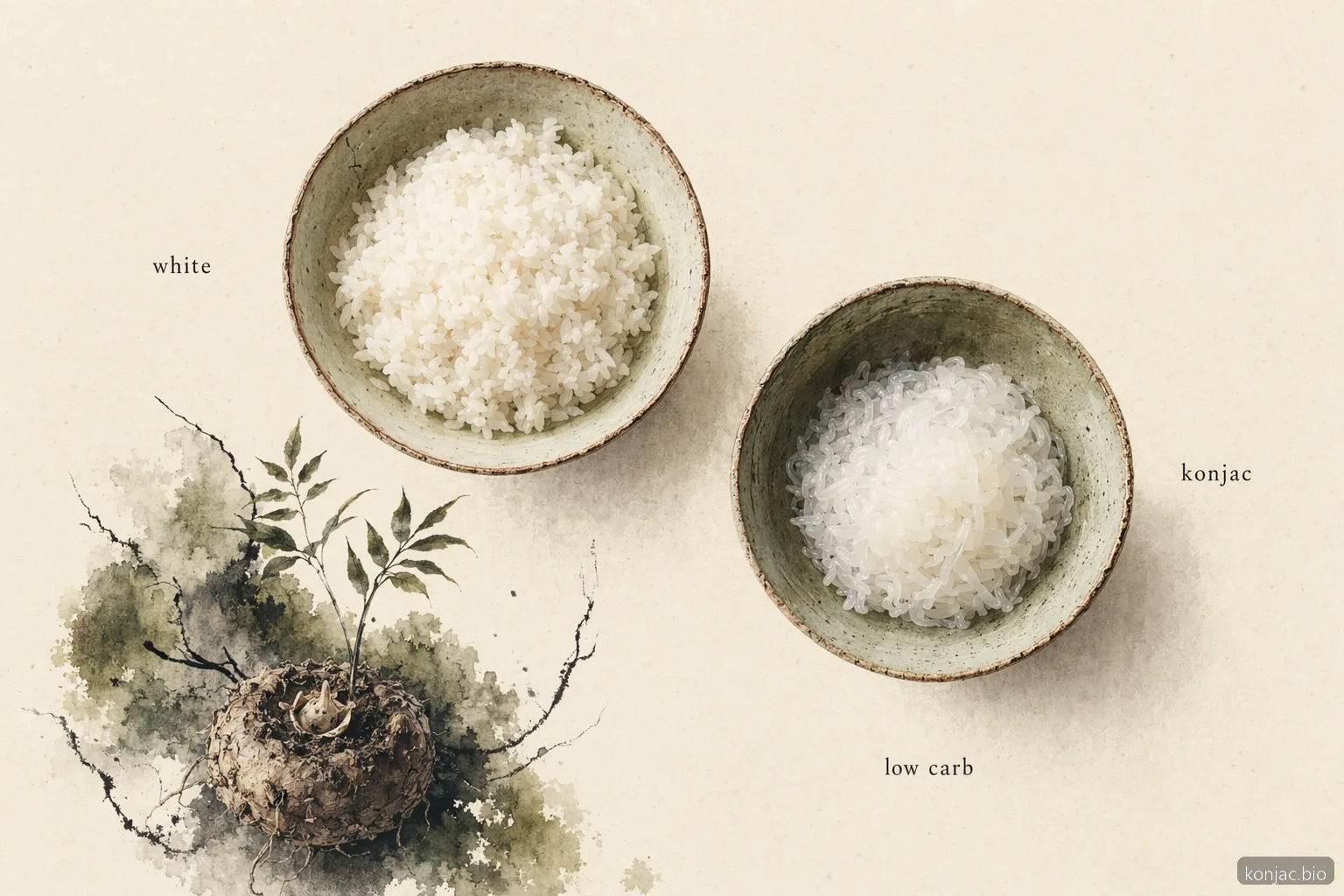
How does shirataki rice low carb nutrition compare with white rice?
Shirataki rice low carb nutrition is very different from white rice: it is much lower in carbohydrate and calories, but it does not supply the same starch energy. The comparison is most useful per 100 grams because serving sizes vary by brand and recipe.
| Food, prepared | Approximate carbohydrate | Approximate calories | Main ingredient | Best use |
|---|---|---|---|---|
| Shirataki rice | 0 to 3 g per 100 g | Usually very low | Water, konjac glucomannan | Low-carb bowls, stir-fries, meal prep |
| Cooked white rice | About 28 g per 100 g [USDA data](https://fdc.nal.usda.gov/) | About 130 kcal per 100 g [USDA data](https://fdc.nal.usda.gov/) | Rice starch | Traditional rice dishes, higher-energy meals |
The tradeoff is texture and satiety. White rice is soft, starchy, and neutral. Shirataki rice is springier and more slippery until it is rinsed, drained, and heated in a dry pan.
For keto-style meals, shirataki rice works best as a base for strongly flavored foods. Sauces with soy sauce, sesame oil, curry paste, tomato, garlic, ginger, chili crisp, or coconut milk help the rice-like pieces absorb flavor. For broader context on konjac rice formats, see the parent guide Konjac Rice: The Low-Carb Rice Substitute Guide.
What is shirataki rice made from?
Shirataki rice is made from konjac flour, water, and a food-grade alkaline setting agent that helps form a firm gel. Konjac flour comes from the corm of Amorphophallus konjac and is rich in glucomannan, a soluble dietary fiber evaluated by EFSA for authorized health claims [EFSA opinion](https://www.efsa.europa.eu/en/efsajournal/pub/1798).
The production idea is simple, even though commercial control is precise:
- Hydrate konjac flour: water swells glucomannan into a viscous gel.
- Set the gel: calcium hydroxide or a similar alkaline ingredient firms the structure.
- Shape the pieces: the gel is cut or formed into rice-like grains.
- Pack in water: the finished rice is sealed in liquid to keep texture stable.
Calcium hydroxide is listed in U.S. food regulations for specified food uses [CFR listing](https://www.ecfr.gov/current/title-21/chapter-I/subchapter-B/part-184/subpart-B/section-184.1205). In shirataki products, the alkaline setting step is one reason newly opened packs can smell slightly mineral or fishy. Rinsing and heating usually reduce that aroma.
Some products include oat fiber, soy fiber, rice flour, or vegetable powders. Those additions can change net carbs, allergens, color, and mouthfeel, so low-carb shoppers should read the ingredient panel rather than relying on the word shirataki alone.
For brands, manufacturers, and private-label teams, konjac.bio sources konjac rice ingredients at wholesale scale, with specification and pricing support available through contact.
Cooking methods for better texture
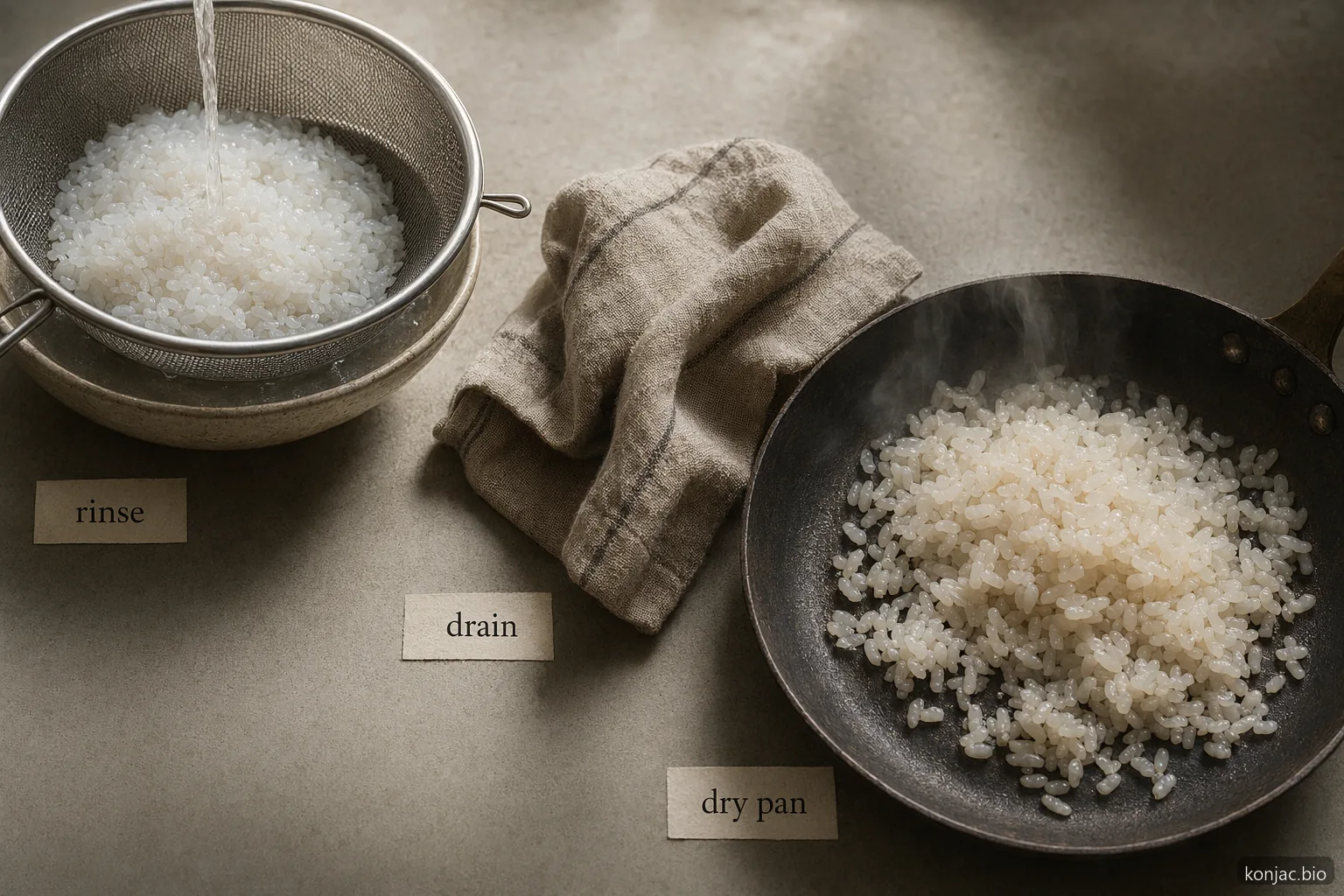
Shirataki rice tastes best when treated as a water-rich ingredient, not as a dry grain. It does not need boiling like rice because the grains are already hydrated and cooked enough for ready-to-heat use.
Use this five-step method for better texture:
- Drain completely: pour off the packing liquid.
- Rinse for 30 to 60 seconds: use cool running water to reduce packing aroma.
- Dry saute for 3 to 5 minutes: heat in a nonstick or stainless pan with no oil until steam slows.
- Add fat and seasoning: use butter, olive oil, sesame oil, curry paste, garlic, or herbs.
- Finish with protein and vegetables: build a bowl, fried rice, pilaf, or saucy entree.
Dry sauteing matters because excess water dilutes sauces. A pan that looks slightly dry before seasoning gives a better bite and helps aromatics cling to the rice-like pieces.
For fried rice, cook eggs, vegetables, and protein first, then fold in the dry-sauteed shirataki rice. For saucy dishes, simmer briefly after seasoning so the grains pick up salt, acid, spice, and fat. For more technique detail, use the related guide how to cook konjac rice.
Safety notes for shirataki rice low carb meals
Shirataki rice low carb meals are best introduced gradually, especially for people who are not used to high-fiber foods. Glucomannan is a soluble fiber, and sudden large portions may cause temporary bloating, gas, or loose stools in some people. The NIH notes that fiber intake changes are often better tolerated when increased gradually with fluids [NIH fiber](https://ods.od.nih.gov/factsheets/Fiber-HealthProfessional/).
Hydration matters because glucomannan absorbs water. Eat shirataki rice as part of a moist meal, chew normally, and avoid swallowing large amounts quickly. Children and people with swallowing difficulty should use extra caution with gel-based foods.
Konjac has a specific safety history in mini-cup jelly candies, where the FDA warned consumers about choking risk from certain konjac-containing jelly cups [FDA warning](https://www.fda.gov/food/alerts-advisories-safety-information/fda-warns-consumers-not-eat-mini-cup-jelly-products-containing-konjac). That warning is about small gel candies, not ordinary hydrated shirataki rice, but it explains why shape, firmness, and eating behavior matter.
For health-benefit language, the most precise wording comes from EFSA. EFSA authorized that konjac glucomannan "contributes to the maintenance of normal blood cholesterol concentrations" and, in the context of an energy-restricted diet, "contributes to weight loss" under stated intake conditions [EFSA opinion](https://www.efsa.europa.eu/en/efsajournal/pub/1798). Shirataki rice can support low-carb meal design, but it should not be framed as a cure or disease solution.
Frequently asked questions
01 Is shirataki rice keto-friendly?
02 Does shirataki rice taste like regular rice?
03 What is the difference between shirataki rice and konjac rice?
04 Can shirataki rice help with weight management?
05 Why does shirataki rice smell odd when opened?
06 How much shirataki rice should I eat in one meal?
- Scientific Opinion on the substantiation of health claims related to konjac mannan, glucomannan · European Food Safety Authority · 2010
- FoodData Central · U.S. Department of Agriculture · 2024
- Fiber Fact Sheet for Health Professionals · National Institutes of Health Office of Dietary Supplements · 2022
- FDA warns consumers not to eat mini-cup jelly products containing konjac · U.S. Food and Drug Administration · 2001
- 21 CFR 184.1205 Calcium hydroxide · Electronic Code of Federal Regulations · 2024