How to cook shirataki so it tastes clean?
How to cook shirataki so it tastes clean is simple: rinse it well, boil it for 2 minutes, then dry-pan cook it before adding sauce. This removes the alkaline packing liquid, reduces the seafood-like aroma, and improves texture.
Most shirataki noodles are made from water and glucomannan, the soluble fiber from the corm of Amorphophallus konjac. Glucomannan is recognized as a dietary fiber under FDA nutrition labeling guidance when it meets the definition for beneficial physiological effects, listed in [FDA fiber](https://www.fda.gov/food/food-labeling-nutrition/questions-and-answers-dietary-fiber).
Use this timing for one 200 g to 250 g drained pack:
- Open the pack over the sink and drain completely.
- Rinse under cold water for 30 to 60 seconds.
- Boil in unsalted water for 2 minutes.
- Drain again and shake off water.
- Dry-pan cook over medium-high heat for 3 to 5 minutes.
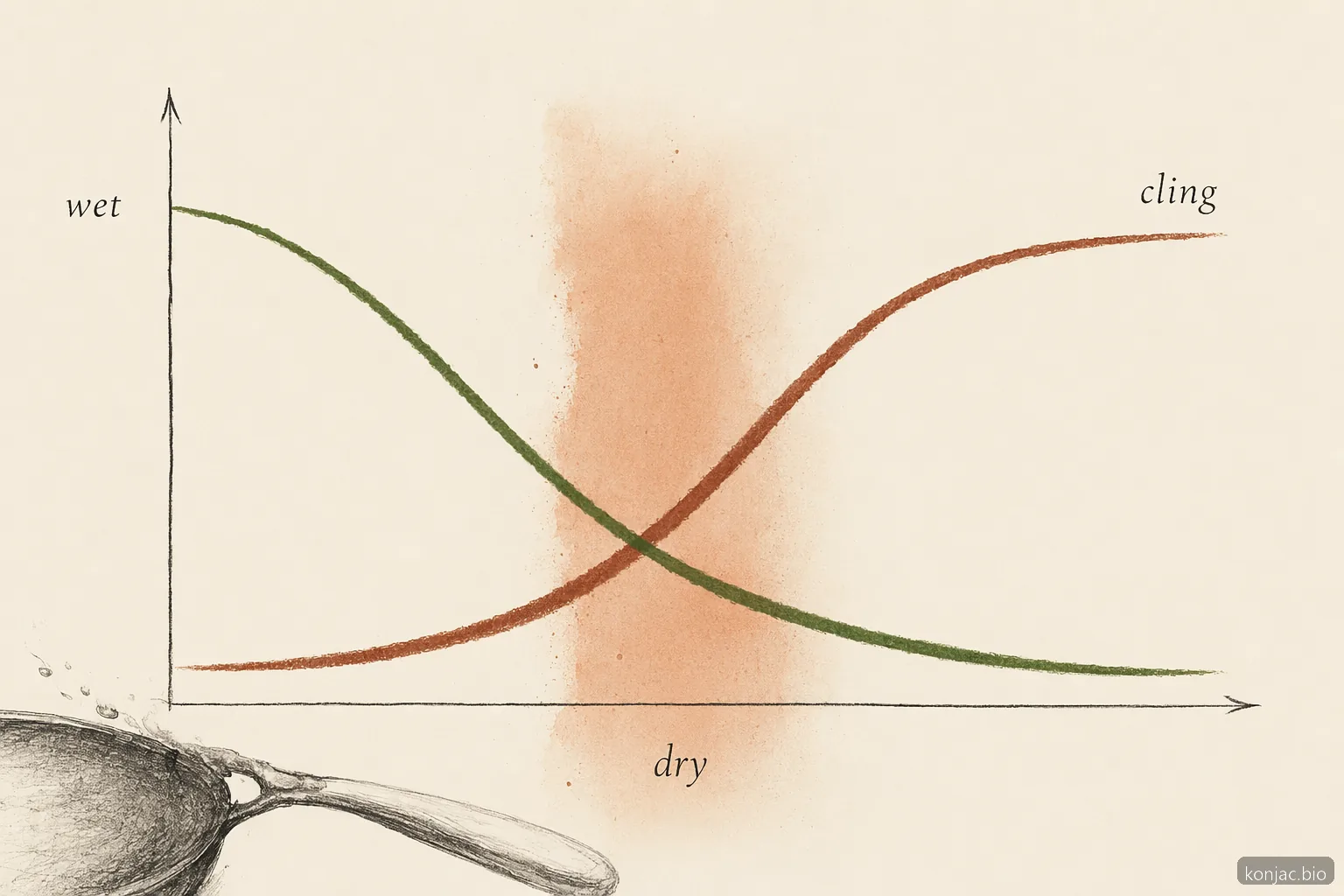
The dry-pan step matters most. Shirataki is over 90% water in many retail formats, so sauce slides off when the noodles are added straight from the bag. Heat first, sauce second.
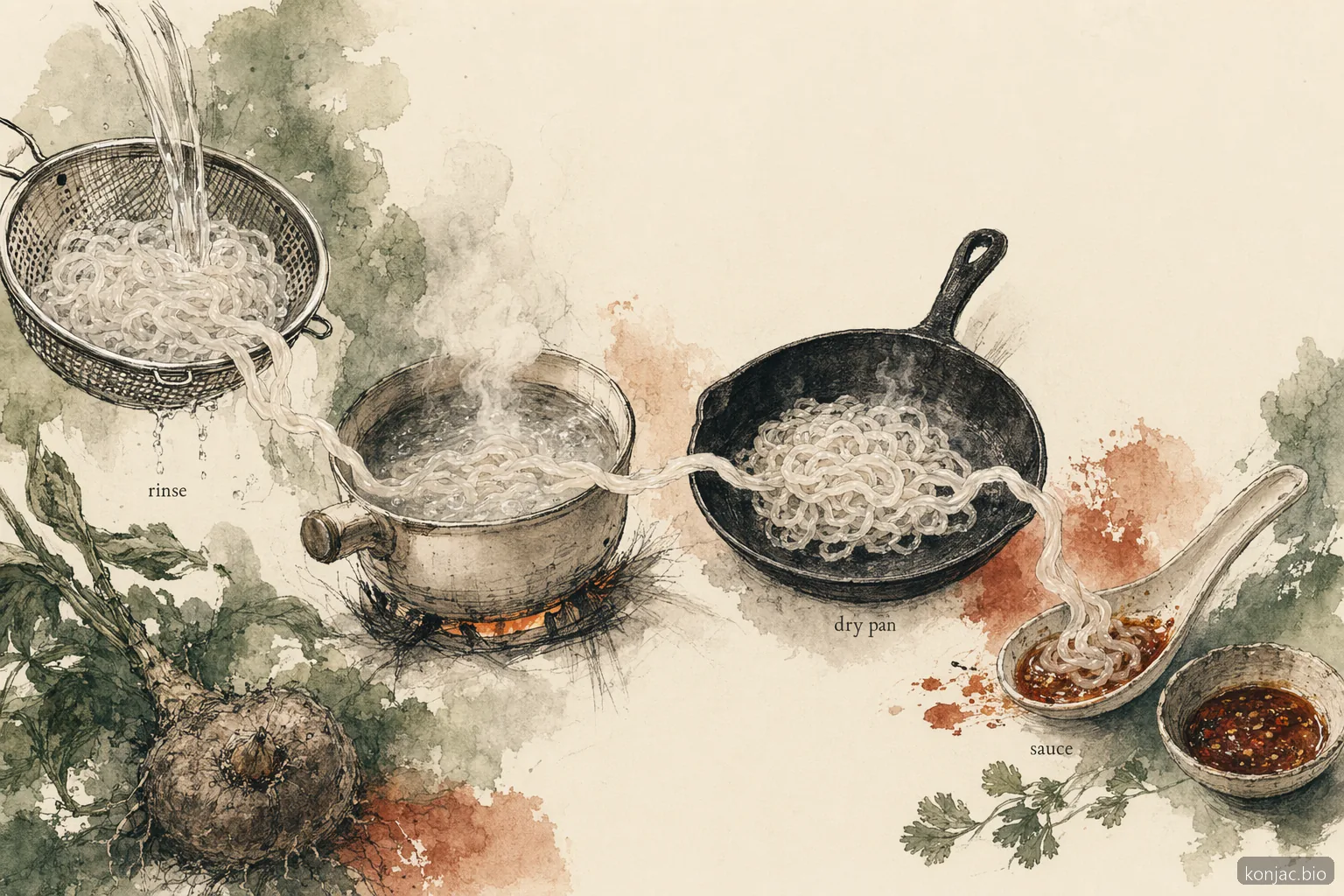
The 5-step shirataki cooking method
The best everyday method is rinse, boil, drain, dry, and sauce. It takes about 8 to 10 minutes and needs no oil until the flavoring stage.
1. Drain. Cut the bag and pour the noodles into a sieve. The liquid is not a broth, and it should not go into the pan.
2. Rinse. Use cold running water and move the noodles with your fingers or tongs. A 30-second rinse is enough for most packs, while thicker fettuccine-style noodles benefit from 60 seconds.
3. Boil. Add the noodles to boiling water for 2 minutes. This step is not for softening, since shirataki is already hydrated. It helps wash off residual aroma and warms the interior.
4. Dry-pan. Move drained noodles into a dry nonstick or stainless pan. Cook over medium-high heat, tossing often, until visible steam slows. The noodles may make a light squeaking sound when ready.
5. Sauce. Add concentrated flavor after water has cooked off. Good options include soy sauce with sesame oil, tomato paste with garlic, curry paste with coconut milk, or miso with ginger.
For product developers and foodservice buyers, konjac.bio sources konjac ingredients at wholesale scale for noodle, gel, and blend applications. Contact the team at /contact/ for specifications and pricing.
How to cook shirataki for stir-fries, soups, and meal prep?
How to cook shirataki for stir-fries, soups, and meal prep depends on the final dish: dry it hard for stir-fries, warm it gently for soups, and store it unsauced for meal prep. The same rinse and boil steps still apply.
| Use case | Best method | Timing | Best flavor base |
|---|---|---|---|
| Stir-fry | Dry-pan first, then sauce in the wok | 3 to 5 minutes dry-pan | Soy, garlic, chili, sesame |
| Soup | Rinse, boil, then add to hot broth | 1 to 2 minutes in broth | Miso, chicken stock, mushroom stock |
| Cold salad | Rinse, boil, chill, dress | 10 minutes chilling | Rice vinegar, lime, peanut, herbs |
| Meal prep | Dry-pan, cool, store plain | Up to 3 days refrigerated | Add sauce when reheating |
For stir-fries, use less sauce than wheat noodles at first. Shirataki does not absorb starch-based sauces the same way, so 2 to 3 tablespoons of concentrated sauce per pack is a good starting point.
For soup, do not simmer shirataki for a long time. It will not turn tender like rice noodles, and a long simmer can make the texture feel springy. Add it near the end, just long enough to heat through.
For more format-specific ideas, see shirataki noodle recipes within the konjac recipes cluster.
Best sauces and formats for shirataki noodles
Shirataki works best with bold, concentrated sauces because the noodles are mostly water and have a neutral flavor. Think of shirataki as a texture carrier rather than a wheat pasta substitute in every dish.
Use these pairings as a practical guide:
- Spaghetti-style shirataki: tomato paste, garlic, olive oil, anchovy, basil, or lean meat sauce.
- Fettuccine-style shirataki: mushroom cream sauce, curry sauce, peanut-lime sauce, or tahini-lemon sauce.
- Rice-shaped shirataki: fried rice, cauliflower rice blends, taco bowls, egg bowls, or broth bowls.
- Angel-hair shirataki: cold sesame salad, spicy soup, pad-style stir-fries, or quick vegetable tosses.
Acid and salt improve flavor fast. A teaspoon of rice vinegar, lemon juice, or lime juice can make a bland bowl taste brighter without adding much volume.
Glucomannan has been studied for satiety and weight-management contexts, but cooking claims should stay practical. The EFSA-authorized wording is: “Glucomannan in the context of an energy restricted diet contributes to weight loss,” with conditions described in the [EFSA opinion](https://www.efsa.europa.eu/en/efsajournal/pub/1798).
Why do shirataki noodles smell fishy at first?
Shirataki noodles can smell fishy at first because they are packed in an alkaline water solution, not because they contain seafood. Rinsing and brief boiling remove most of that pack aroma.
The odor is strongest when the bag is opened and weakest after the noodles are boiled and dry-pan cooked. If the aroma remains strong after 2 minutes of boiling, rinse again and repeat the dry-pan step for another 2 minutes.
Do not eat shirataki straight from the bag if the smell bothers you. The texture will also be slippery and watery, which makes sauce separation more likely.
Konjac foods have different safety considerations depending on format. The FDA has warned about choking hazards from certain mini-cup gel candies containing konjac, especially because of shape and gel strength, in [FDA jelly](https://www.fda.gov/food/alerts-advisories-safety-information/fda-warns-consumers-against-eating-mini-cup-gel-candies). Shirataki noodles are a different format, but careful chewing is still sensible for any springy noodle.
Frequently asked questions
01 Do you have to boil shirataki noodles before frying?
02 Why are my shirataki noodles rubbery?
03 Can shirataki noodles absorb sauce?
04 How long should you dry-pan shirataki?
05 Are shirataki noodles the same as konjac noodles?
- Scientific Opinion on the substantiation of health claims related to konjac mannan (glucomannan) · European Food Safety Authority · 2010
- Questions and Answers on Dietary Fiber · U.S. Food and Drug Administration · 2024
- FDA Warns Consumers Against Eating Mini-Cup Gel Candies · U.S. Food and Drug Administration · 2002
- FoodData Central · U.S. Department of Agriculture · 2024