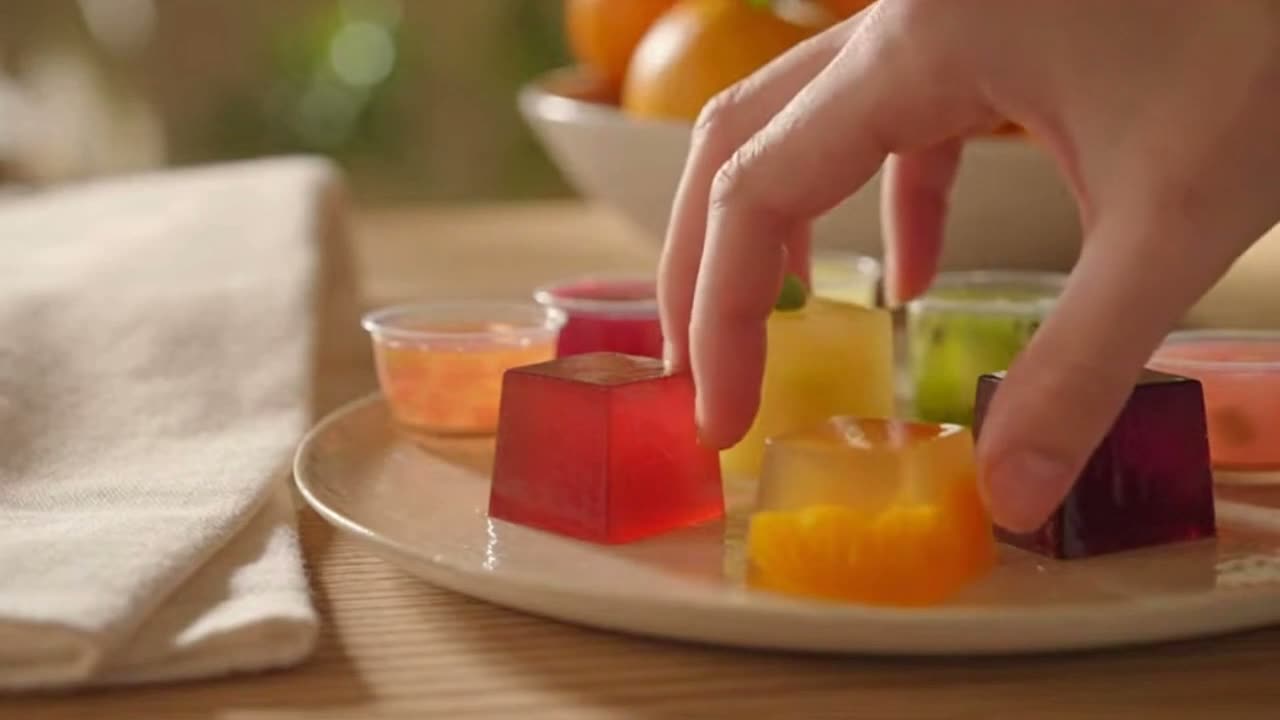
What are the most common konjac jelly side effects?
The most common konjac jelly side effects are gas, bloating, stomach fullness, and loose stools. These effects are usually linked to glucomannan, the soluble fiber in konjac, plus sweeteners that may ferment in the gut.
Konjac jelly is usually made from water, sweetener, flavor, acidulant, and konjac gum or konjac flour. The key functional fiber is glucomannan from Amorphophallus konjac, a plant source evaluated in the European Food Safety Authority opinion on glucomannan health claims EFSA opinion.
Digestive effects are more likely when someone eats several cups or pouches at once, eats konjac jelly on an empty stomach, or is not used to high-fiber foods. The U.S. Food and Drug Administration lists 28 g as the Daily Value for dietary fiber in a 2,000 calorie diet FDA fiber, while a single konjac jelly snack may provide only a few grams, depending on formula.
- Gas: gut bacteria ferment some added fibers and sweeteners.
- Bloating: glucomannan binds water and can create a fuller stomach feeling.
- Loose stools: large servings may speed bowel movement in sensitive people.
- Nausea: fast eating or overconsumption can create stomach pressure.
For broader context on fiber tolerance, see our parent guide to konjac safety.
Why can konjac jelly side effects include choking?
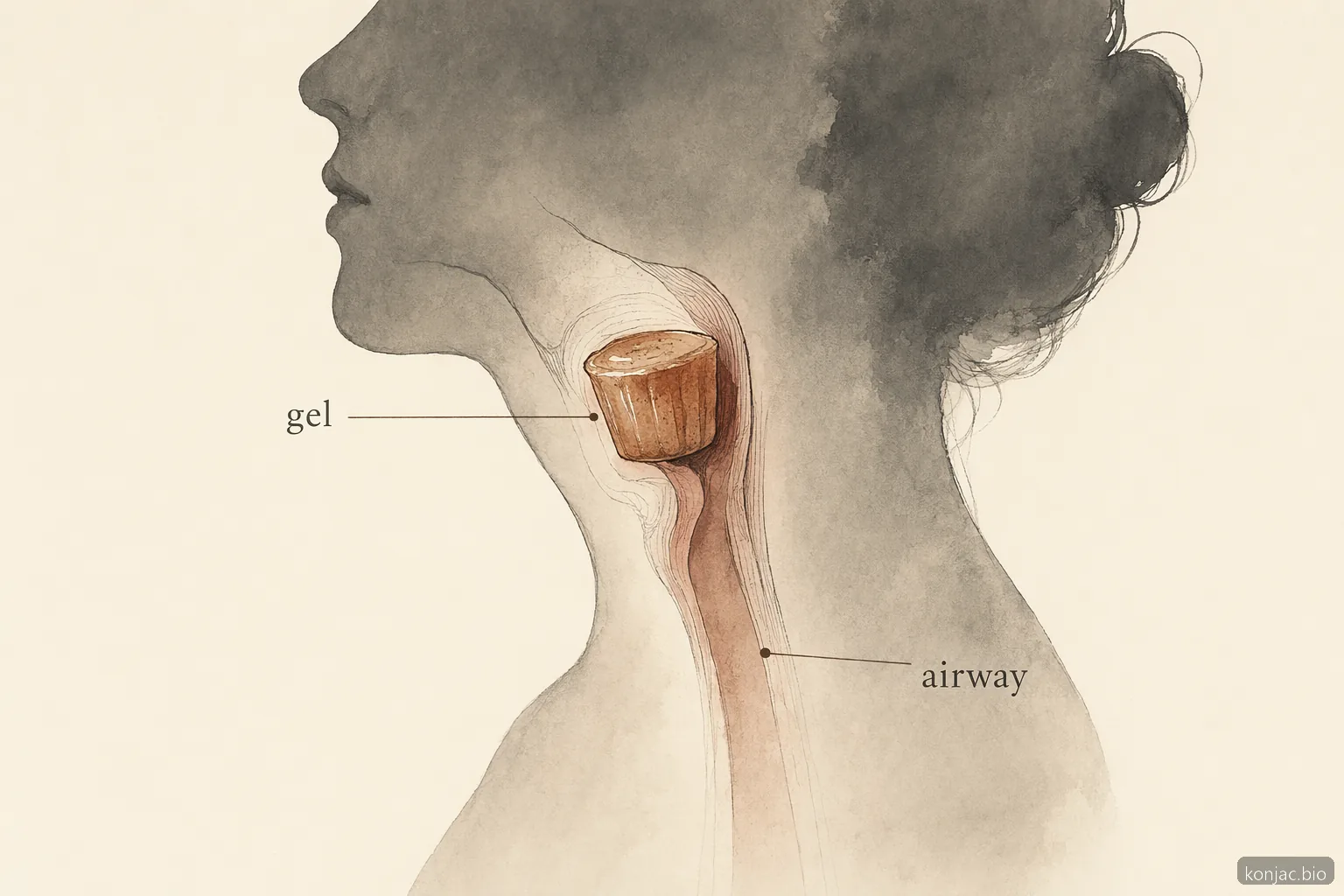
Konjac jelly side effects can include choking because some gels are firm, slippery, and resistant to breaking apart in the mouth. A mini-cup gel can slide toward the throat before it is fully chewed.
The FDA has specifically flagged mini-cup gel candy containing konjac as a choking hazard, noting that the product shape and gel strength can make it difficult to dislodge FDA guidance. This concern is different from ordinary digestive discomfort because it can happen quickly during eating.
Risk increases when jelly pieces are round, plug-shaped, or packed in small cups that encourage suction. It also increases when a person tips the cup back and swallows the whole gel instead of cutting it into pieces.
| Format | Relative concern | Why it matters |
|---|---|---|
| Mini-cup gel | Higher | Can be swallowed whole and lodge in the throat |
| Pouch jelly | Moderate | Fast squeezing can deliver a large slippery mass |
| Cut cubes | Lower | Smaller pieces are easier to chew and control |
| Spoonable soft gel | Lower | Breaks apart more easily before swallowing |
For a deeper safety comparison across konjac foods, see our sibling guide on konjac choking risk.
Ingredients that can amplify stomach discomfort
Konjac is not always the only reason a jelly snack causes digestive discomfort. Many products combine konjac gum with erythritol, maltitol, sorbitol, inulin, fruit concentrates, citric acid, or added caffeine.
Sugar alcohols are common in low-sugar jelly because they add sweetness with fewer calories than sucrose. They can also draw water into the gut, and larger servings may increase gas or loose stools in sensitive consumers.
Inulin and other added fibers can stack with glucomannan. A snack that looks small may deliver multiple fermentable ingredients, especially when labeled as low-calorie, high-fiber, keto-style, or sugar-free.
Acidic flavors can also matter. Lemon, yuzu, grapefruit, and berry formulas often use citric acid or malic acid, which some people experience as stomach sharpness when eaten quickly or without other food.
Ingredient review is especially useful for people comparing konjac jelly with shirataki noodles, because noodles are typically water, konjac flour, and calcium hydroxide, while jelly often has a longer sweetener and flavor system. See our sibling guide to shirataki side effects for the noodle-specific comparison.
How can you reduce konjac jelly side effects at home?
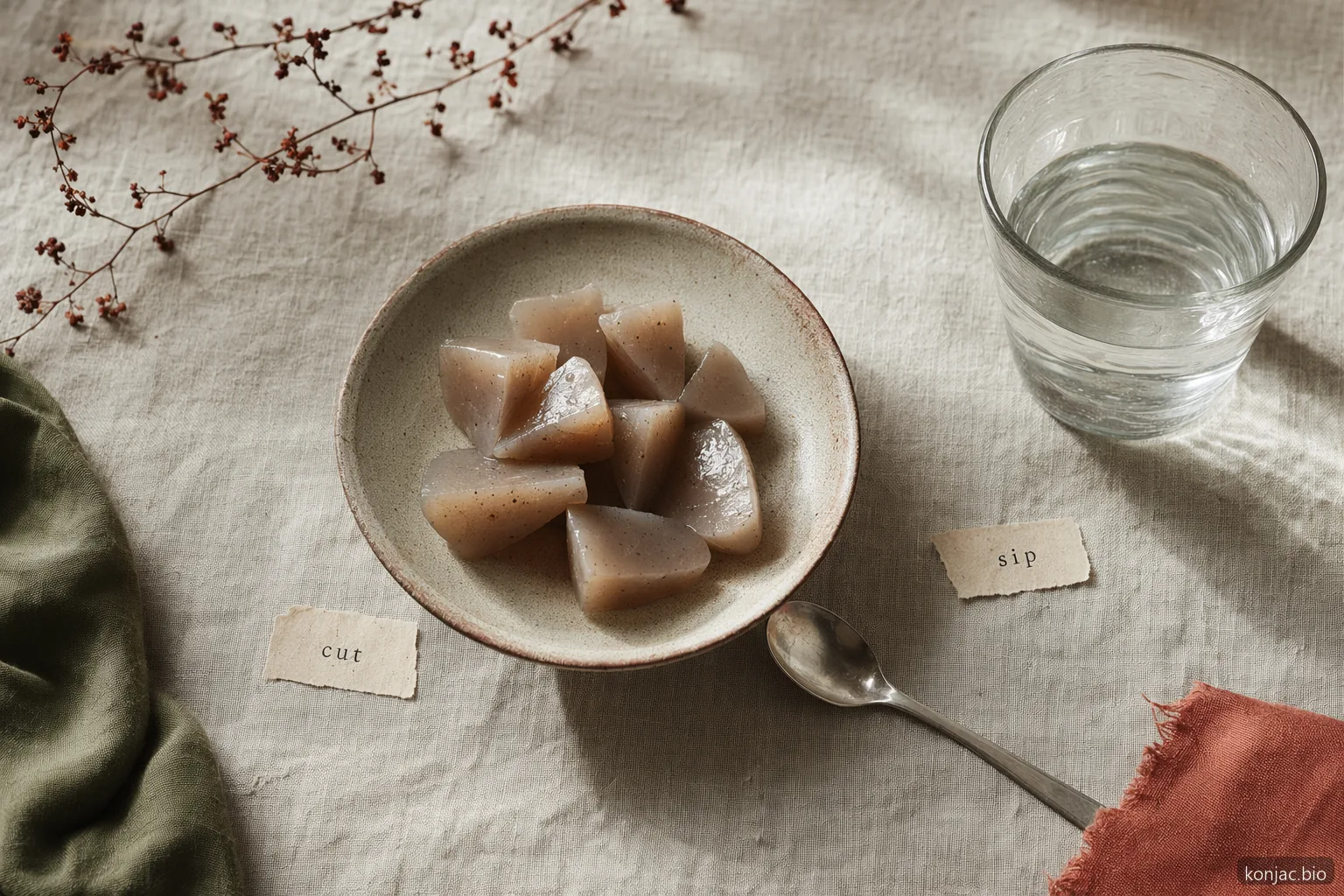
You can reduce konjac jelly side effects by eating small portions, chewing thoroughly, drinking water, and avoiding whole mini-cup gels. The safest habit is to slow the eating process so the gel breaks apart before swallowing.
- Start small: try half a serving if you are new to konjac or high-fiber snacks.
- Cut firm gels: slice mini-cup or block-style jelly into small pieces before eating.
- Chew fully: do not suck the gel directly from a cup into the throat.
- Separate servings: wait several hours before eating another pouch or cup.
- Check sweeteners: limit products with multiple sugar alcohols if you are sensitive.
Glucomannan has been studied for weight management and blood cholesterol claims. EFSA's approved wording for one weight-management claim is: "Glucomannan in the context of an energy restricted diet contributes to weight loss" EFSA opinion. That claim has conditions of use, including 3 g daily in three 1 g servings with 1-2 glasses of water before meals.
Konjac jelly snacks are not automatically equivalent to that claim because formulas, serving sizes, and water intake vary. A dessert pouch with flavoring and sweeteners should be judged by its own Nutrition Facts panel and texture, not by konjac's general reputation.
Safer product design for konjac jelly
Safer konjac jelly design focuses on texture, shape, serving size, and labeling. A softer gel that breaks under light chewing is generally less concerning than a dense plug-shaped gel in a mini cup.
For consumer brands, the practical safety questions are concrete: how many grams are in one serving, how firm is the gel, can the piece be swallowed whole, and does the label warn against use by young children? Texture testing, cut-size guidance, and clear front-of-pack instructions can reduce misuse.
Manufacturers should also validate sweetener systems. A formula with konjac gum plus maltitol, sorbitol, or inulin may be attractive for low-sugar positioning, but digestive tolerance can be lower at higher serving sizes.
For B2B teams, konjac.bio sources konjac ingredients at wholesale for food and beverage applications, with specification-led support for texture and viscosity targets. Contact us for supply discussions.
Good safety communication is specific, not alarming. Labels should tell consumers to chew fully, avoid whole mini-cup swallowing, keep firm gels away from young children, and stop eating if the product causes repeated digestive discomfort.
Frequently asked questions
01 Is konjac jelly safe for adults?
02 Can children eat konjac jelly?
03 Why does konjac jelly make me bloated?
04 Is konjac jelly the same as shirataki noodles for side effects?
05 How much konjac jelly is too much?
06 Who should be most cautious with konjac jelly?
- Import Alert 33-15: Detention Without Physical Examination of Gel Candies Containing Konjac · U.S. Food and Drug Administration · 2024
- Scientific Opinion on the substantiation of health claims related to konjac mannan · European Food Safety Authority · 2010
- Effect of glucomannan on plasma lipid and glucose concentrations, body weight, and blood pressure · PubMed · 2008
- Questions and Answers on Dietary Fiber · U.S. Food and Drug Administration · 2024