Where can I find konjac rice near me?
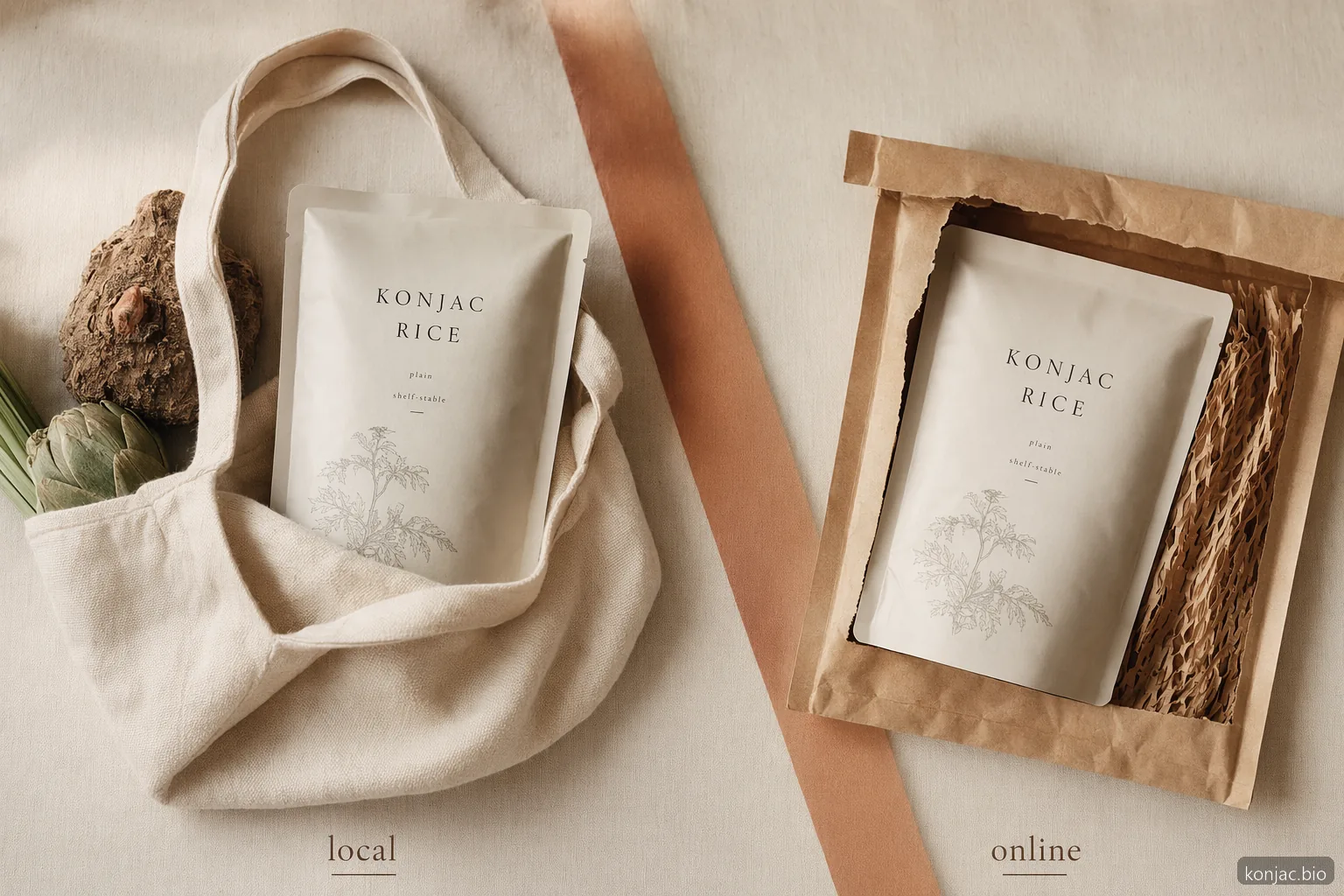
You can usually find konjac rice near me in Asian grocery stores, natural food stores, large supermarkets, and local delivery apps with shelf-stable low-carb or shirataki products.
Konjac rice is usually stocked near shirataki noodles, tofu, refrigerated meat alternatives, gluten-free pasta, or keto products. Some stores keep wet-packed konjac rice at room temperature because unopened packs are shelf-stable, while others place it in refrigerated health-food cases.
| Local source | Where to look | Best for |
|---|---|---|
| Asian grocery | Shirataki, tofu, noodle, or hot pot aisle | Lowest price per pack |
| Natural food store | Low-carb, gluten-free, or refrigerated section | Cleaner ingredient panels |
| Large supermarket | Pasta, rice alternative, or diet aisle | Convenient single-pack trial |
| Delivery app | Search shirataki rice, konjac rice, or miracle rice | Same-day availability check |
If a store search returns only noodles, ask for shirataki rice or konjac grain-style rice. Retailers often use shirataki for all konjac formats, even when the product is cut into rice-like pieces.
For a full ingredient, nutrition, and cooking overview, start with our parent guide: konjac rice.
What should I check before buying konjac rice near me?
Before buying konjac rice near me, check the ingredient list, drained weight, net carbs, storage instructions, expiration date, and whether the pack needs rinsing before cooking.
A typical konjac rice pack contains purified water, konjac flour or glucomannan, and calcium hydroxide. Glucomannan is the soluble fiber fraction from Amorphophallus konjac, and it is the functional ingredient evaluated in the EFSA opinion on konjac mannan and weight management EFSA claim.
- Ingredient list: Shorter lists are easier to compare. Look for konjac flour, glucomannan, water, and calcium hydroxide.
- Drained weight: A 250 g pouch may deliver much less edible rice after draining. Compare drained weight when possible.
- Carbohydrate line: Use the Nutrition Facts panel. FDA guidance explains that serving size and total carbohydrate are label basics for comparing foods FDA labels.
- Texture format: Some packs are soft and rice-like. Others are firmer, closer to chopped shirataki noodles.
- Odor note: A mild alkaline or sea-like aroma is common in wet-packed konjac. Rinsing and dry-pan heating reduce it.
For product developers, konjac.bio sources konjac ingredients at wholesale scale and can support specification discussions through our contact page.
Konjac rice near me versus online buying
Local buying wins when you need one or two packs today. Online buying wins when you want case pricing, repeatable supply, mixed formats, or a specific ingredient specification.
Search behavior matters. Typing konjac rice near me into a map app may miss stores that label the product as shirataki rice, konjac grain, low-carb rice, or miracle rice. Searching all four terms usually gives better coverage.
| Buying route | Strength | Tradeoff |
|---|---|---|
| Local store | Immediate purchase, no shipping | Smaller selection |
| Same-day delivery | Fast stock check across stores | Higher per-pack cost |
| Online marketplace | More brands, bulk packs, reviews | Shipping time and variable freshness |
| Wholesale supplier | Specifications, lot control, case volumes | Best for business buyers |
For household use, buy one local pouch first and test it with a familiar sauce. If the texture works, online case buying can reduce cost per serving and keep the same product on hand.
For commercial use, focus less on retail location and more on particle size, viscosity, microbiological specification, allergen statements, and packaging format. Those factors affect finished product consistency more than a local shelf search.
Label reading walkthrough for local konjac rice
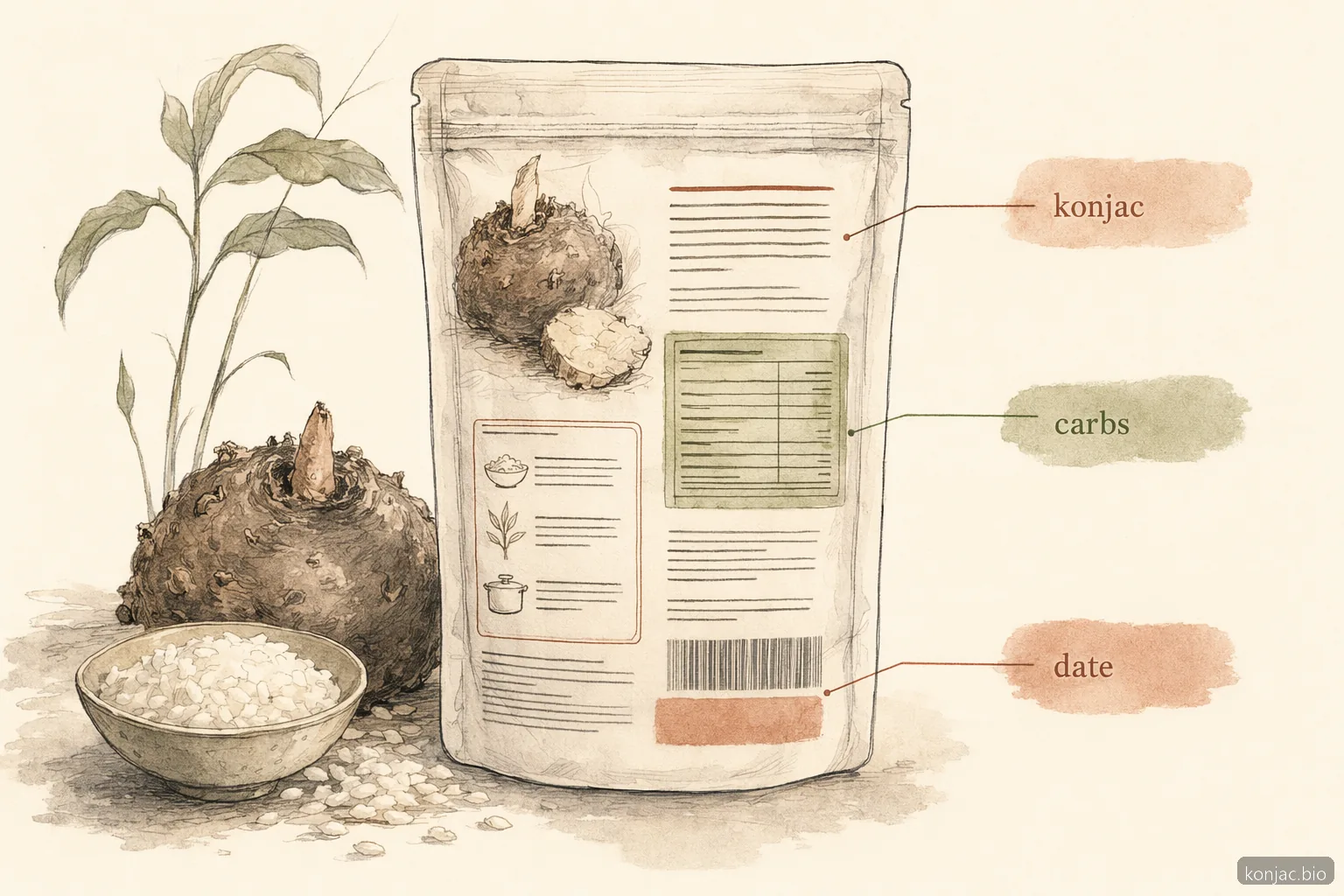
Pick up the pouch and read it in this order: front claim, serving size, drained weight, ingredient list, nutrition panel, date code, and cooking instructions. This sequence avoids the most common mistake, comparing a wet package weight against another product's drained or cooked serving.
Konjac rice is mostly water, so the pack may feel heavier than its usable portion suggests. A label that gives drained weight is more helpful than one that lists only total pouch weight.
Use this quick aisle checklist:
- Serving size: Compare nutrition per serving and per package.
- Total carbohydrate: Check whether fiber is listed separately.
- Sodium: Some wet-packed products vary widely by brine.
- Cooking step: Rinse, drain, and heat instructions are a sign the maker expects aroma reduction.
- Storage: Unopened shelf-stable packs and refrigerated packs should not be handled the same way.
White rice is a useful benchmark. Cooked long-grain white rice lists about 130 calories per 100 g in USDA FoodData Central USDA data. Many konjac rice products are far lower in calories because they are primarily water and glucomannan fiber, but exact numbers depend on the brand formula and serving size.
If calories are the main reason for switching, compare our focused guide to konjac rice calories before choosing a pack.
Is konjac rice near me a healthy swap for regular rice?
Konjac rice near me can be a useful lower-calorie, lower-carbohydrate swap for regular rice when it fits your meal pattern, portion needs, and texture preferences.
The main functional component is glucomannan, a soluble fiber from konjac. EFSA's authorized wording states: "Glucomannan in the context of an energy restricted diet contributes to weight loss" when the specified intake conditions are met EFSA wording. A normal bowl of konjac rice is not automatically equivalent to a tested glucomannan supplement dose, so label math matters.
Konjac rice works best as a volume food. It adds bulk under stir-fries, curries, eggs, tofu, seafood, or vegetables without the starch load of ordinary rice. It does not taste like jasmine, basmati, or sushi rice by itself, so sauce, aromatics, and dry-pan heating make a visible difference.
A practical cooking method is simple:
- Drain the pouch fully.
- Rinse under cold water for 30 to 60 seconds.
- Boil for 1 to 2 minutes or dry-pan heat until steam drops.
- Add sauce, protein, vegetables, and fat for a complete meal.
For detailed preparation methods, see how to cook konjac rice.
Frequently asked questions
01 Why can I find shirataki rice but not konjac rice near me?
02 Does konjac rice need refrigeration?
03 What ingredients should good konjac rice contain?
04 Why does konjac rice smell odd when opened?
05 Is local konjac rice better than online konjac rice?
- Scientific Opinion on the substantiation of health claims related to konjac mannan (glucomannan) · EFSA Journal · 2010
- How to Understand and Use the Nutrition Facts Label · U.S. Food and Drug Administration · 2024
- Glucomannan and obesity: a critical review · PubMed · 2008
- FoodData Central: Rice, white, long-grain, regular, cooked · USDA FoodData Central · 2019