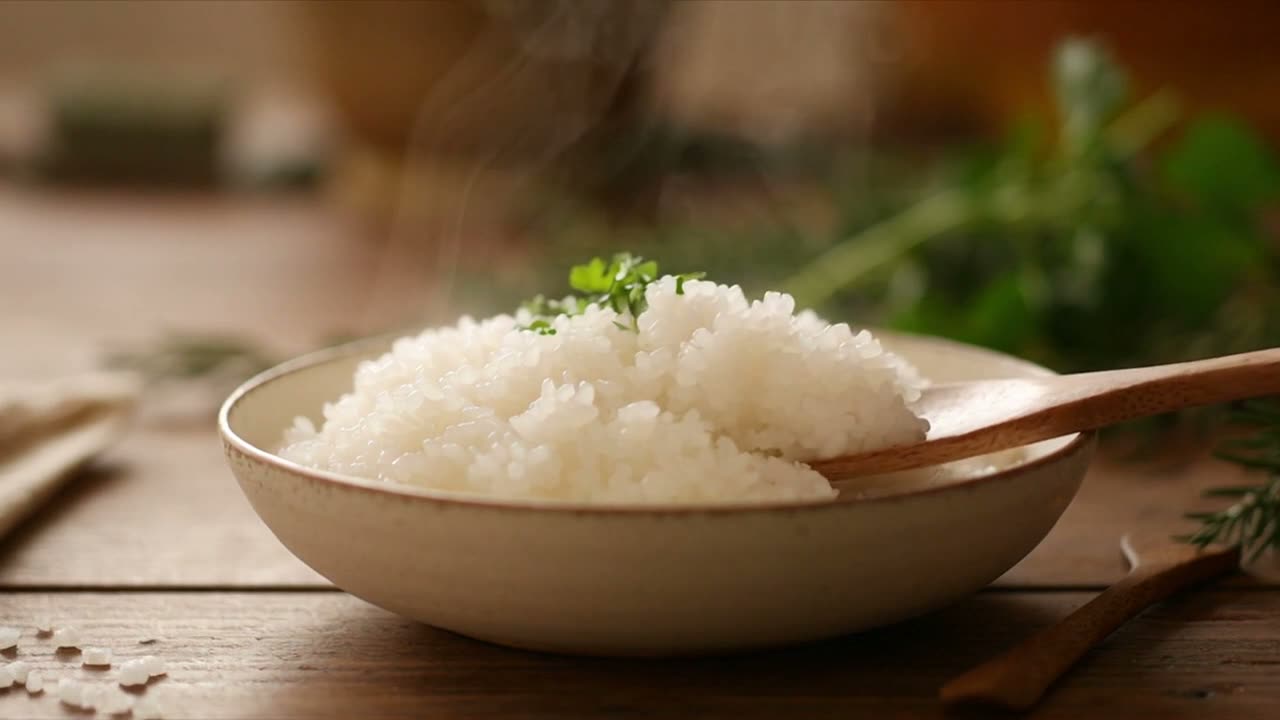
What is dried konjac rice?
Dried konjac rice is dehydrated rice-shaped konjac granules that absorb hot water and become a chewy, low-carb rice substitute.
The main functional ingredient is glucomannan, a soluble dietary fiber found in the corm of Amorphophallus konjac. Food science reviews describe konjac glucomannan as a highly viscous polysaccharide used in gels, noodles, and fiber-rich foods, including rice-shaped formats konjac glucomannan.
Dried formats are different from ready-to-eat wet konjac rice. Wet pouches are already hydrated in liquid, while dried granules need a soak or simmer step before serving. That single difference changes storage, freight, texture control, and portion sizing.
For a broader overview of rice substitutes, see the parent guide to konjac rice. For label-focused details, the related konjac rice nutrition guide covers calories, fiber, net carbs, and serving calculations.
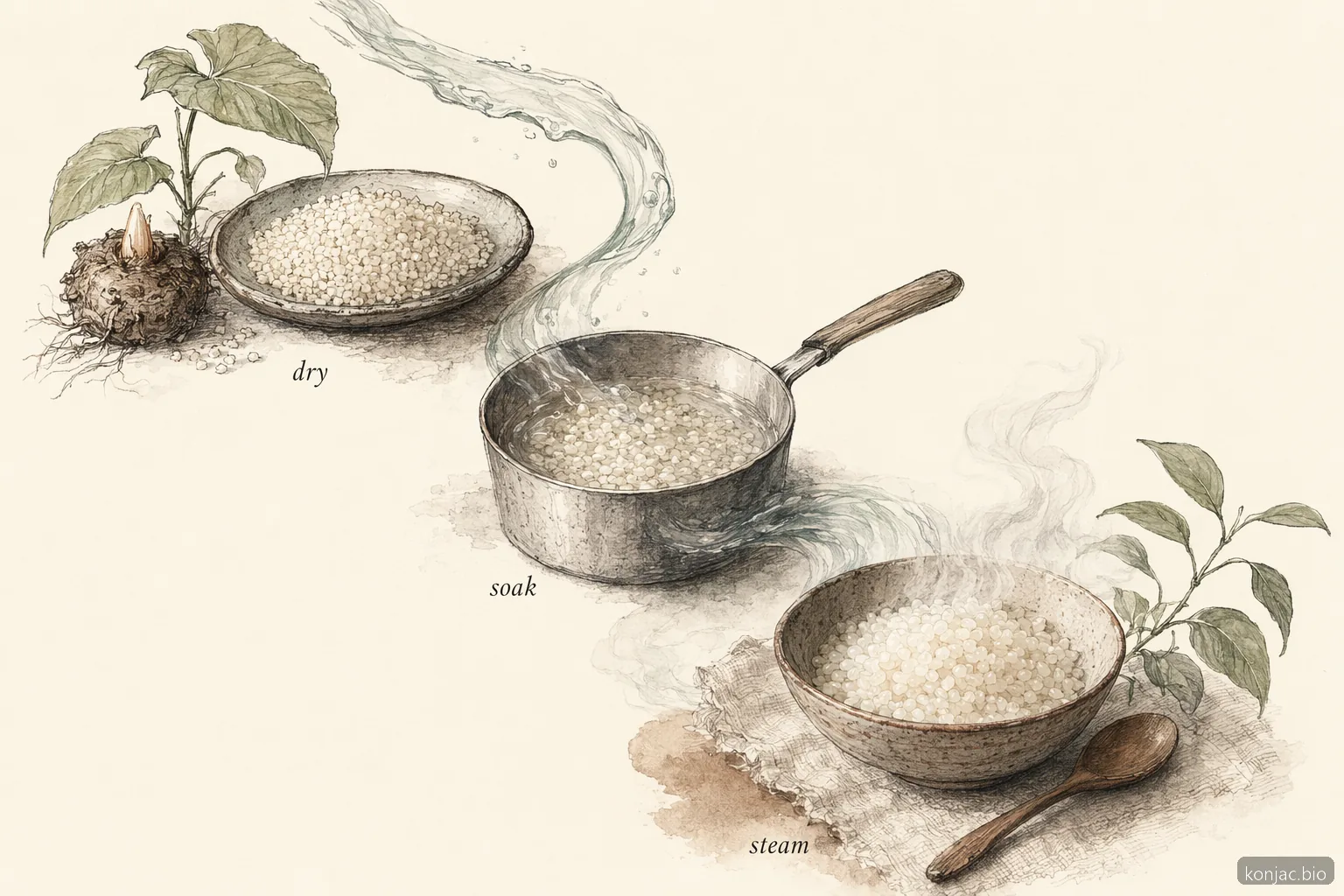
How do you cook dried konjac rice?
You cook dried konjac rice by hydrating it in hot water, draining it well, then heating it in a pan or sauce until the texture is tender and the surface is dry.
A practical method is simple:
- Add 1 part dried konjac rice to 3 to 5 parts hot water.
- Soak or simmer for 5 to 10 minutes, depending on granule size.
- Drain through a fine sieve.
- Rinse briefly if the product has a natural konjac aroma.
- Dry-pan for 1 to 2 minutes before adding sauce, seasoning, or vegetables.
Dry-panning matters because konjac holds water inside a gel network. Removing surface water helps sauces cling instead of pooling at the bottom of the bowl. For fried rice, use a wider pan and cook the hydrated grains until steam drops noticeably.
Texture improves when dried konjac rice is paired with strong flavors. Soy sauce, sesame oil, curry, tomato sauce, chili crisp, lemon, garlic, and mushroom stock all work well because konjac itself has a mild taste. Some cooks blend 50% hydrated konjac rice with 50% cooked jasmine, basmati, or brown rice for a lower-carb bowl that still has familiar grain bite.
Do not eat dried granules straight from the package. Konjac products expand with water, and the U.S. Food and Drug Administration has warned about choking risks in certain konjac gel candies konjac warning. Rice granules are a different format, but hydration before eating is still the sensible preparation step.
For a complete bowl, pair hydrated and dry-panned konjac rice with a portion of protein and vegetables, such as roughly 120 grams of cooked protein and 150 grams of mixed vegetables plus a spoonful of dressing or sauce, rather than seasoning the rice alone.
Dried konjac rice nutrition and label math
Dried konjac rice is usually very low in calories after hydration because most of the finished serving is water plus soluble fiber. The exact numbers depend on the formula, added starches, serving size, and whether the label lists nutrition for dry weight or prepared weight.
A common label challenge is concentration. A 10 g dry portion may become 80 g to 120 g prepared rice after hydration. That means nutrition per 100 g dry product can look much higher than nutrition per 100 g prepared product, even when the food has not changed.
| Label basis | What it means | Why it matters |
|---|---|---|
| Dry weight | Nutrition before water is added | More concentrated numbers per 100 g |
| Prepared weight | Nutrition after hydration | Closer to what people eat |
| Serving size | Supplier-defined portion | Best for comparing packaged foods |
In U.S. labeling, dietary fiber is defined and declared under FDA Nutrition Facts rules, with specific attention to fibers that have beneficial physiological effects dietary fiber. For konjac products, brands should verify whether the listed fiber source, serving size, and claim language match the target market.
In the European Union, EFSA has evaluated glucomannan health claims. The approved weight-management wording is specific: "Glucomannan in the context of an energy restricted diet contributes to weight loss" when conditions of use are met EFSA opinion. Broader wording should be avoided unless it matches permitted claims and local rules.
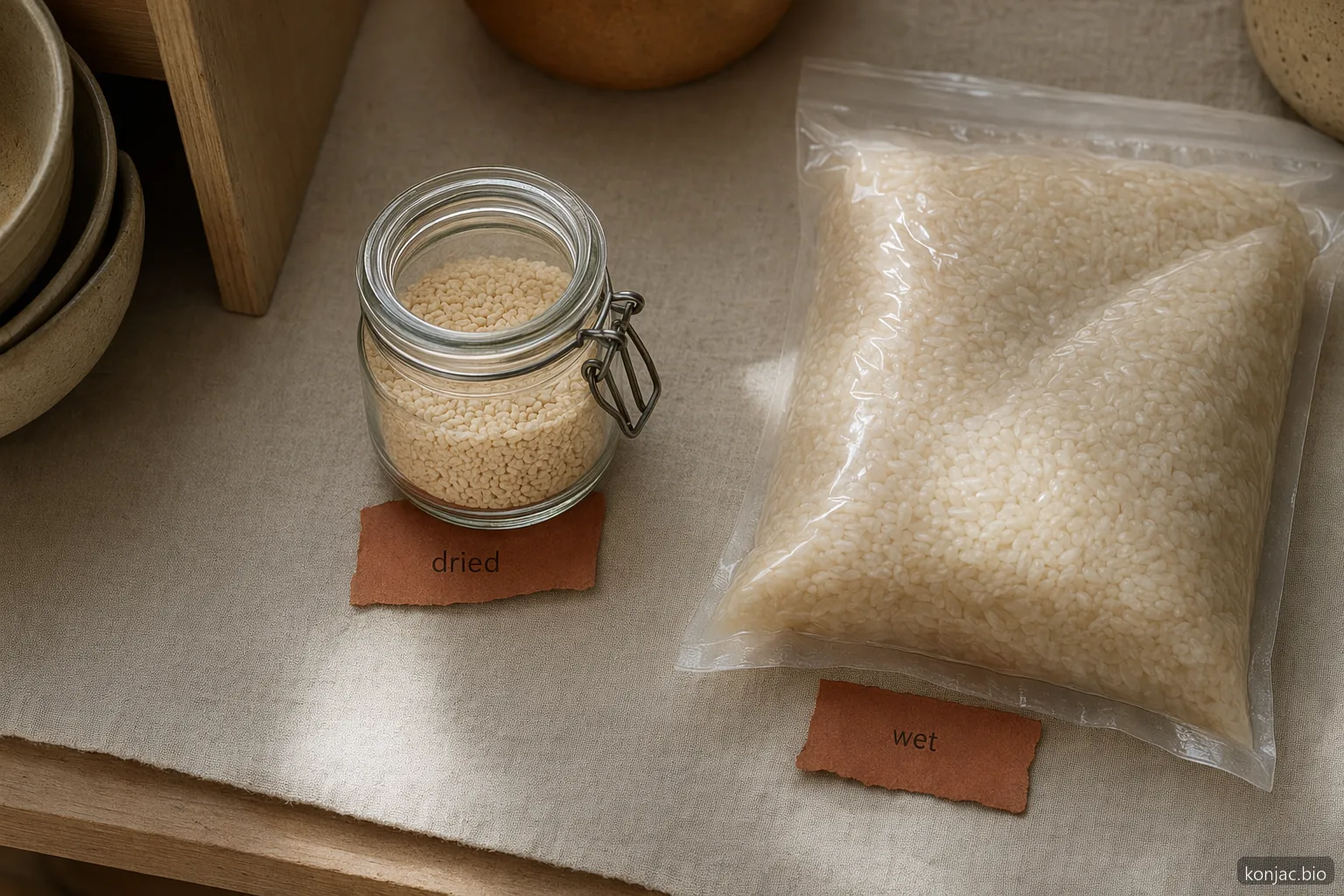
How does dried konjac rice compare with wet konjac rice?
Dried konjac rice is lighter, more compact, and more flexible for storage, while wet konjac rice is faster because it is already hydrated.
The best choice depends on how the product will be used. Retail pouches favor convenience. Foodservice, meal kits, and dry pantry assortments often favor dehydration because shipping water is expensive and bulky.
| Feature | Dried konjac rice | Wet konjac rice |
|---|---|---|
| Preparation | Hydrate, drain, heat | Drain, rinse, heat |
| Storage | Pantry-stable, compact | Pantry-stable if sealed, heavier |
| Freight | Lower shipped weight | Higher shipped weight |
| Texture control | Adjustable by soak time | Fixed by pouch process |
| Best use | Bulk, meal prep, export, dry mixes | Fast home meals, grab-and-cook retail |
Dried rice also gives product developers more formulation room. A dry blend can include konjac rice, seasonings, dried vegetables, proteins, and sauce powder in one pack. The consumer adds water and heat, similar to instant rice cups or dry soup cups.
Wet konjac rice can still win on speed. A pouch can be opened and heated in 2 to 3 minutes. For more kitchen technique, see the related guide on how to cook konjac rice.
Buying, storage, and formulation notes for dried konjac rice
Good dried konjac rice should have consistent granule size, neutral aroma after rinsing, clear hydration instructions, and a certificate package that matches the intended sales channel. For retail or foodservice, ask for specification sheets, allergen statements, nutrition data, microbiology limits, country of origin, and shelf-life validation.
Storage is straightforward when the pack is sealed. Keep dried konjac rice in a cool, dry place away from steam, direct sunlight, and strong odors. Once opened, reseal tightly or move the product into an airtight container, because moisture pickup can change flow, texture, and shelf life.
For commercial teams, packaging format matters as much as the ingredient. Common B2B formats include 5 kg bags, 10 kg cartons, private-label retail packs, and ready-to-blend granules for instant meal cups. Nitrogen flushing, desiccants, and high-barrier film may be useful where humidity is high.
Konjac.bio sources konjac ingredients and finished formats at wholesale scale for brands, distributors, and manufacturers. For specifications, formats, and bulk pricing, contact the team at konjac.bio wholesale.
Quality checks should include hydration ratio, cooking loss, finished bite, aroma, color, and grain separation. A purchasing team can request a 3-point cook test: 5 minutes, 8 minutes, and 10 minutes. This shows whether the granules stay intact across realistic kitchen conditions.
Frequently asked questions
01 Is dried konjac rice the same as shirataki rice?
02 How much water should I use for dried konjac rice?
03 Does dried konjac rice have carbs?
04 Can dried konjac rice be used in fried rice?
05 How long does dried konjac rice last?
06 Is dry konjac rice the same as dried konjac rice?
- Konjac Glucomannan: From Molecular Architecture to Translational Applications. A Critical Review of Structure-Function Relationships, Emerging Biomedical Frontiers, and Industrial Challenges · Foods (PubMed) · 2026
- Scientific Opinion on the substantiation of health claims related to konjac mannan (glucomannan) · European Food Safety Authority · 2010
- Questions and Answers on Dietary Fiber · U.S. Food and Drug Administration · 2024
- Import Alert 33-15: Detention Without Physical Examination of Gel Candies Containing Konjac · U.S. Food and Drug Administration · 2024