How to cook with shirataki noodles so they taste clean?
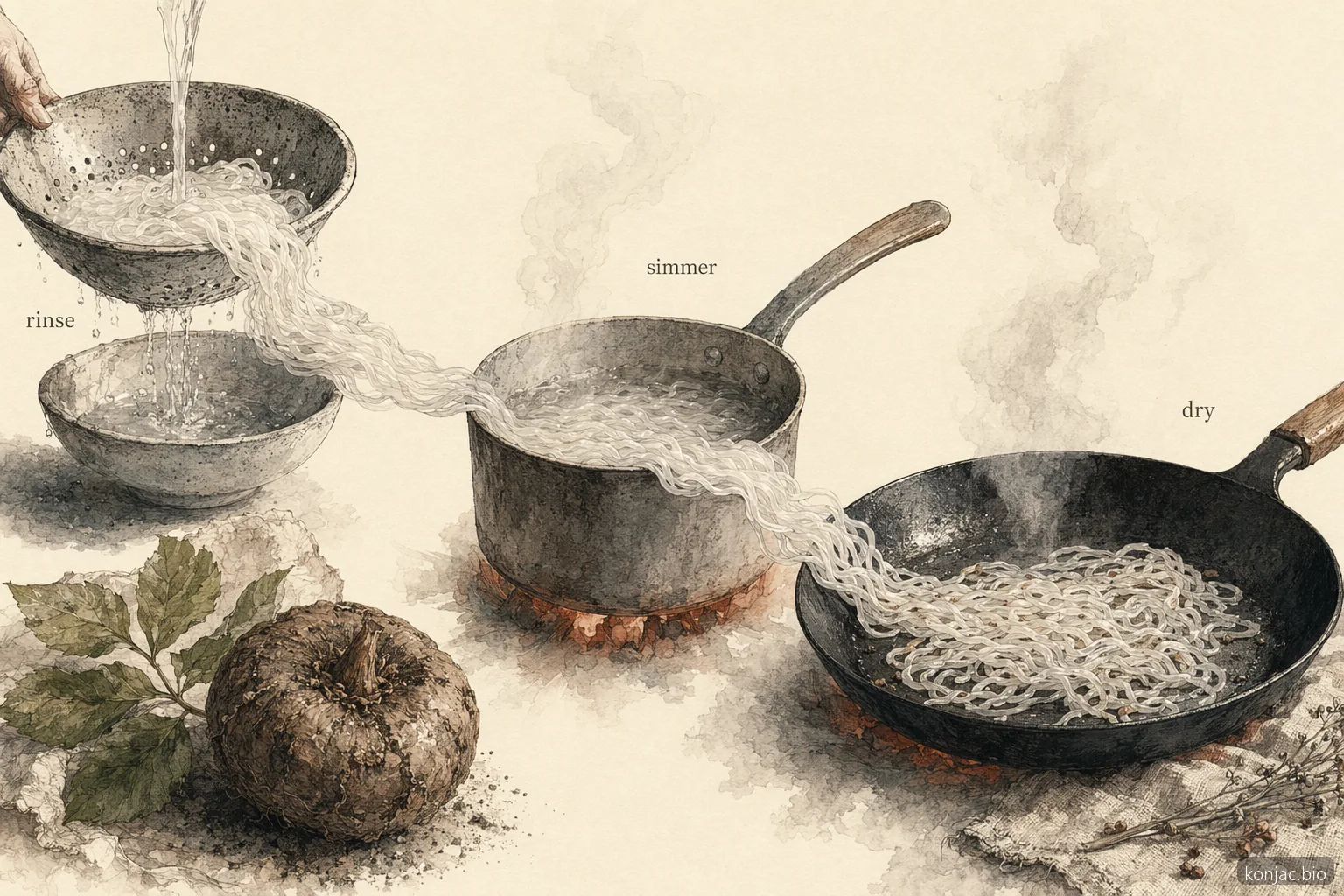
The cleanest way to cook shirataki noodles is to rinse, briefly boil, drain hard, then dry them in a hot skillet before seasoning.
Plain shirataki noodles are made from water and konjac glucomannan, a soluble fiber from Amorphophallus konjac, described in food science references as [konjac glucomannan](https://www.sciencedirect.com/topics/agricultural-and-biological-sciences/konjac-glucomannan). The packet liquid can smell slightly alkaline or ocean-like, but that aroma is not the noodle itself. A short rinse plus heat removes most of it.
- Drain: Empty the pouch into a fine sieve.
- Rinse: Run cold water over the noodles for 30 to 60 seconds.
- Boil: Simmer in plain water for 2 to 3 minutes.
- Drain again: Shake off as much water as possible.
- Dry-pan: Cook in a bare skillet for 3 to 5 minutes, stirring, until the noodles squeak lightly.
- Sauce last: Add oil, aromatics, protein, vegetables, and sauce only after the noodles are dry.
The dry-pan step is the difference between a watery bowl and a noodle dish with cling. Shirataki does not absorb sauce like wheat pasta, so the goal is surface coating, not absorption.
How to cook with shirataki noodles in stir-fries, soups, and pasta?
To cook with shirataki noodles in real dishes, match the noodle to the cooking style: dry-pan for stir-fries, simmer briefly for soups, and reduce sauces before tossing.
Shirataki has very little starch, so it will not thicken pan sauces the way wheat pasta does. Build flavor in the sauce, reduce excess water, then coat the noodles at the end.
| Dish style | Best method | Flavor target |
|---|---|---|
| Stir-fry | Dry-pan noodles, then toss with vegetables and sauce for 1 to 2 minutes | Garlic, ginger, soy sauce, sesame oil, chili crisp |
| Ramen or soup | Rinse and boil first, then warm in broth for 1 to 2 minutes | Miso, tamari, scallion, mushroom, soft egg |
| Pasta-style bowl | Dry-pan noodles, reduce sauce separately, then toss off high heat | Tomato, pesto, Alfredo-style cream sauce, black pepper |
| Cold noodle salad | Rinse, boil, chill, drain very well, then dress | Rice vinegar, sesame paste, cucumber, herbs |
For stir-fries, cook protein and vegetables separately so the pan stays hot. Add shirataki at the end with 2 to 4 tablespoons of concentrated sauce per serving.
For soup, do not boil the noodles for 10 minutes in broth. Long simmering does not make them softer. It usually dilutes the broth and makes the texture bouncier.
The best sauces, proteins, and vegetables for shirataki noodles
Shirataki noodles work best with concentrated sauces, crisp vegetables, and proteins that bring fat, umami, or browning.
Because shirataki is neutral, the flavor must come from the pan. Strong pantry ingredients make the noodles taste intentional rather than like a substitute.
| Category | Best choices | Why they work |
|---|---|---|
| Sauces | Soy sauce, tamari, miso, gochujang, curry paste, pesto | High-impact flavor in small amounts |
| Fats | Sesame oil, chili oil, olive oil, butter | Coats the noodle surface and carries aroma |
| Proteins | Egg, tofu, shrimp, chicken, beef, tempeh | Adds chew, browning, and satiety |
| Vegetables | Cabbage, bok choy, mushrooms, peppers, zucchini | Cook quickly without flooding the pan |
| Finishes | Lime, rice vinegar, scallion, cilantro, toasted sesame | Adds brightness and texture |
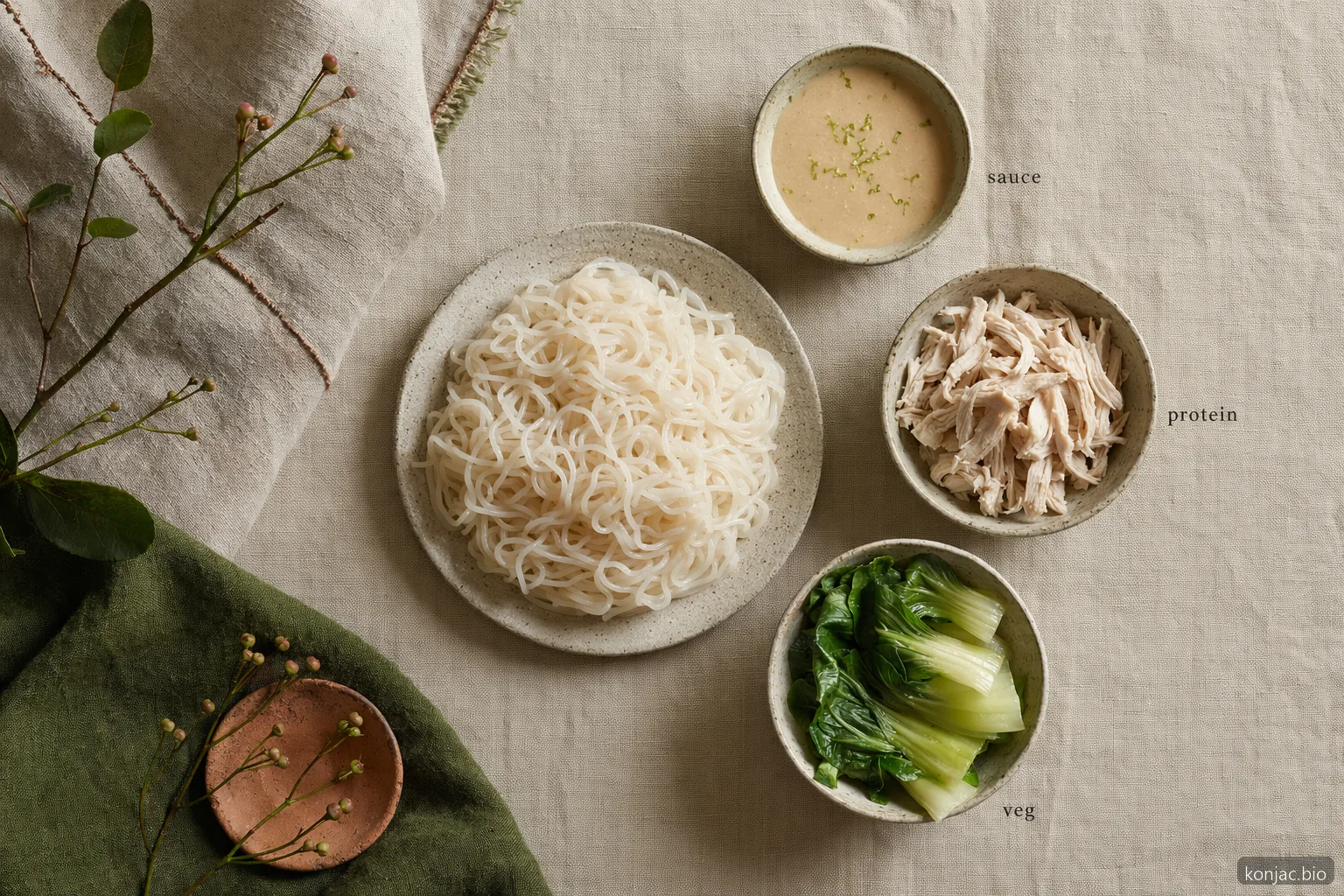
A good starting ratio is 200 grams drained shirataki, 100 to 150 grams protein, 150 grams vegetables, and 2 to 4 tablespoons sauce. This keeps the bowl balanced and avoids a wet pile of noodles.
For more formula-based ideas, see the parent guide Konjac Recipes: Cooking with Shirataki and Konjac Flour. If you like rice bowls, the same rinse and dry-pan logic also applies to how to cook konjac rice.
B2B aside: konjac.bio sources konjac flour and shirataki inputs at wholesale scale for food brands, co-packers, and distributors. For specifications or volume pricing, contact us at /contact/.
Are shirataki noodles healthy or just low calorie?
Shirataki noodles are low in available carbohydrate and may support fullness because they are mostly water plus glucomannan fiber, but they are not a complete meal by themselves.
Glucomannan has been studied for body weight management, and EFSA approved this exact claim: “Glucomannan in the context of an energy restricted diet contributes to weight loss,” with use conditions described in the [EFSA opinion](https://www.efsa.europa.eu/en/efsajournal/pub/1798). A critical review indexed by PubMed evaluated glucomannan and body weight outcomes in controlled human studies through the lens of [weight management](https://pubmed.ncbi.nlm.nih.gov/18842808/).
For a meal, pair shirataki with protein, vegetables, and fat. A bowl with only noodles and thin broth may be low in calories, but it can also be low in protein, minerals, and essential fatty acids.
Safety also depends on form and serving style. The U.S. FDA has flagged mini-cup gel candies containing konjac because of choking risk, especially when the gel is firm and does not dissolve easily, as noted in an [FDA alert](https://www.accessdata.fda.gov/cms_ia/importalert_114.html). Shirataki noodles are a different food format, but they should still be chewed well and served with enough liquid or sauce for comfortable eating.
Common shirataki noodle mistakes and fixes
Most shirataki noodle problems come from excess water, weak seasoning, or cooking them like wheat pasta.
Shirataki does not release starch into the pan. That means pasta habits, such as saving starchy cooking water or expecting sauce to thicken on contact, do not apply.
| Mistake | What happens | Fix |
|---|---|---|
| Skipping the rinse | Packet aroma stays noticeable | Rinse 30 to 60 seconds under cold water |
| Adding sauce too early | The dish turns watery | Dry-pan first, sauce last |
| Using thin broth as sauce | Flavor tastes flat | Use concentrated sauces or reduce liquids |
| Overloading vegetables | The pan steams instead of searing | Cook vegetables separately or in batches |
| Expecting wheat texture | The bounce feels surprising | Use Asian noodle dishes, soups, and salads where springiness fits |
If the texture still feels too firm, cut the noodles shorter with kitchen shears after rinsing. Shorter strands are easier to mix with vegetables, sauces, and proteins.
For baking, sauces, and batters that need thickening rather than noodles, see konjac flour recipes. Konjac flour behaves differently because it hydrates into a gel, while shirataki noodles are already formed and packed in liquid.
Frequently asked questions
01 Do shirataki noodles need to be cooked?
02 Why do shirataki noodles smell fishy or alkaline?
03 Can shirataki noodles replace pasta in every recipe?
04 How long should I dry-pan shirataki noodles?
05 Are shirataki noodles the same as konjac noodles?
06 What is the best sauce for shirataki noodles?
- Scientific Opinion on the substantiation of health claims related to konjac mannan (glucomannan) · European Food Safety Authority · 2010
- Glucomannan and obesity: a critical review · PubMed · 2008
- Import Alert 33-15: Gel candies containing konjac · U.S. Food and Drug Administration · 2024
- Konjac glucomannan topic page · ScienceDirect · 2024