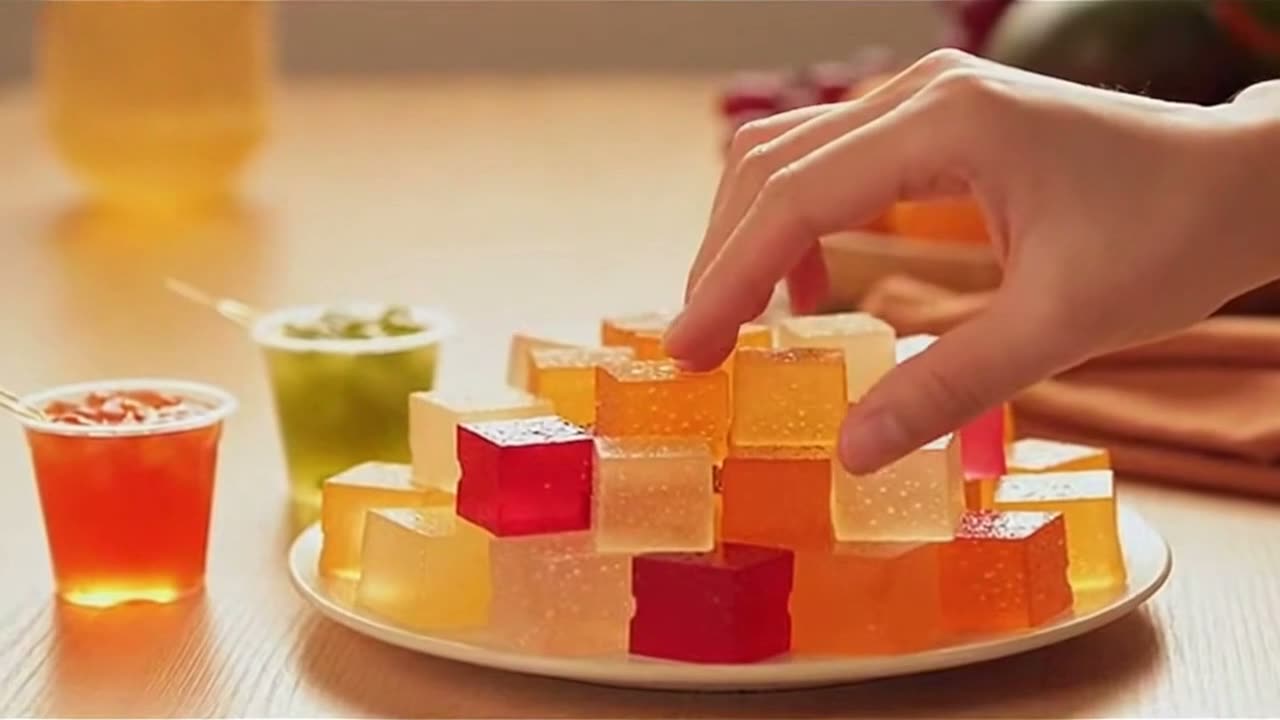
Does konjac jelly weight loss work?
Konjac jelly weight loss may work when the jelly helps reduce daily calories and supplies enough glucomannan to support fullness.
Konjac jelly is usually made from water, sweetener, flavor, acidulant, and konjac glucomannan, the soluble fiber extracted from the corm of Amorphophallus konjac. The mechanism is simple: glucomannan absorbs water, increases viscosity, and can slow stomach emptying, which may help some people feel full longer.
The strongest regulatory wording in Europe is the EFSA-approved claim: “Glucomannan in the context of an energy restricted diet contributes to weight loss.” EFSA ties that claim to 3 g of glucomannan daily in three 1 g doses, each taken with 1 to 2 glasses of water before meals, in an EFSA opinion.
Most ready-to-eat jelly pouches contain much less than 1 g glucomannan per serving unless the label states otherwise. That means the jelly may still be useful as a low calorie snack, but it may not deliver the EFSA dose by itself.
- Best use: replace a 200 to 300 calorie dessert with a 5 to 30 calorie jelly.
- Weak use: add jelly on top of the same daily intake.
- Key check: calories, sugar alcohols, fiber grams, and serving size.
For the broader evidence on konjac and body weight, see Konjac for Keto and Weight Loss.
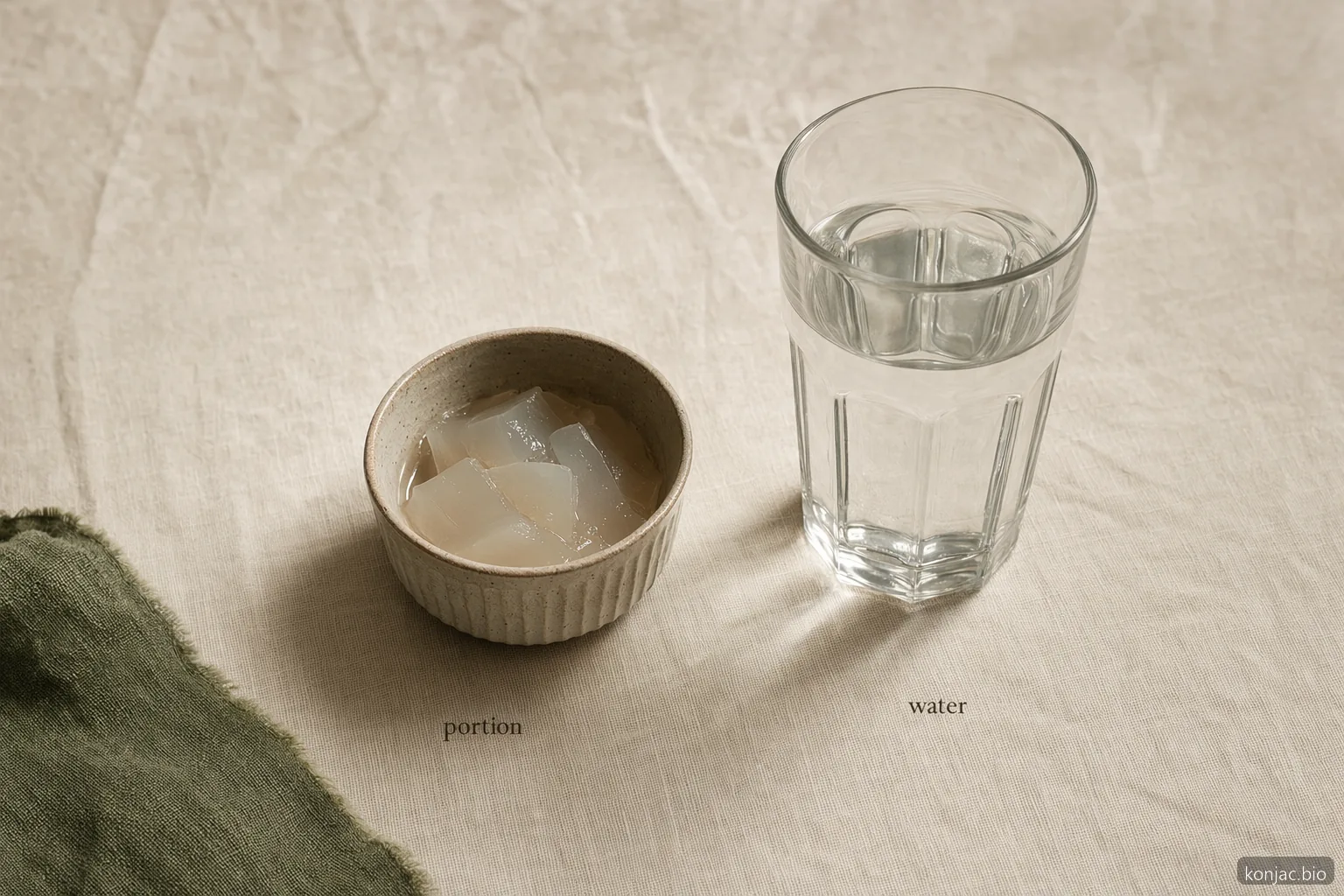
How does konjac jelly weight loss fit keto macros?
Konjac jelly weight loss fits keto macros when the product has very low sugar, low net carbs, and no starch-heavy fruit syrup.
A keto diet usually limits digestible carbohydrate to about 20 to 50 g per day, although individual limits vary. Konjac glucomannan itself is a soluble fiber, not a digestible starch, so the problem is rarely the konjac. The problem is the sweetener system.
| Label item | Better choice | Watch out for |
|---|---|---|
| Calories | 5 to 30 kcal per pouch | Fruit syrup, juice concentrate |
| Total sugar | 0 to 2 g | 10 g or more per pouch |
| Fiber | Stated grams per serving | No fiber amount listed |
| Sweeteners | Erythritol, stevia, monk fruit, sucralose | Sucrose, glucose syrup, maltodextrin |
A keto-friendly jelly can help with the hardest part of weight management: replacing habitual sweet snacks without adding many calories. For example, swapping a 250 kcal pastry for a 15 kcal konjac jelly saves 235 kcal. Repeating that five times per week saves 1,175 kcal before any other diet change.
Some people track total carbs, while others track net carbs as total carbohydrate minus fiber. If the product uses sugar alcohols, the digestive response can vary. A cautious first serving is half a pouch, especially for people sensitive to polyols.
For a meal-based comparison, see our guide to shirataki noodles keto, which covers konjac noodles as a low calorie pasta swap.
What ingredients make a better konjac jelly for weight control?
A better konjac jelly for weight control has water first, konjac glucomannan clearly listed, minimal sugar, and transparent nutrition per serving.
The best label is boring. Water should be the main ingredient, followed by konjac powder or konjac glucomannan, acid such as citric acid, flavor, and a low calorie sweetener. If sugar, glucose syrup, or fruit concentrate appears early, the jelly is closer to candy than a weight management snack.
- Konjac source: look for konjac powder, konjac gum, or glucomannan.
- Serving clarity: one pouch should equal one serving.
- Fiber grams: a listed amount is better than vague “contains fiber” wording.
- Sugar level: 0 to 2 g sugar is easier to fit into keto or calorie tracking.
- Texture: spoonable or squeezable formats are safer than firm mini-cup gels.
Glucomannan has been studied in controlled trials, but findings are not identical across populations and doses. A 2008 randomized trial reported body weight changes with glucomannan supplementation in overweight adults, indexed on PubMed. A snack product with a small fiber dose should not be expected to match a structured supplement protocol.
For manufacturers, ingredient specifications matter as much as marketing claims. konjac.bio sources konjac ingredients at wholesale scale for food and wellness product teams, with support available through our contact page.

Konjac jelly weight loss vs shirataki noodles and capsules
Konjac jelly, shirataki noodles, and glucomannan capsules serve different roles in a weight management plan. Jelly is a sweet snack replacement, shirataki noodles replace calorie-dense starch, and capsules deliver measured fiber doses.
| Format | Best role | Main advantage | Main limitation |
|---|---|---|---|
| Konjac jelly | Snack or dessert swap | Low calorie, sweet, portable | Often low glucomannan per pouch |
| Shirataki noodles | Meal base | Replaces pasta or noodles | Needs rinsing and sauce |
| Glucomannan capsules | Measured fiber intake | Easier to reach gram doses | Requires water and timing |
Jelly is the easiest format for evening snacking because it feels like dessert. Shirataki noodles are more filling when paired with protein, vegetables, and sauce. Capsules are the most precise option when a plan targets the EFSA condition of 3 g glucomannan daily before meals.
A practical day might use all three without forcing them. A person could eat shirataki noodles with eggs and vegetables at lunch, take a labeled glucomannan serving before dinner with water, and choose one low sugar konjac jelly after dinner instead of candy.
The main mistake is assuming “konjac” automatically means “weight loss.” The format, dose, calories, sugar, and total diet decide the outcome. For measured fiber use, see konjac glucomannan weight loss.
Safety checks before using konjac jelly weight loss snacks
Konjac jelly weight loss snacks should be soft, portion controlled, and eaten carefully because some firm mini-cup gel formats have been linked with choking hazards.
The safety concern is physical texture, not the idea of konjac itself. Firm, slippery mini-cup gels can be difficult to chew fully, especially for young children and older adults. FDA import controls have identified mini-cup gel candies containing konjac as a choking concern in an FDA alert.
Choose spoonable cups, squeeze pouches, or softer gels instead of small rigid cups that can be swallowed whole. Chew slowly and avoid eating konjac jelly while lying down, driving, or rushing. Keep firm gel products away from children unless the product is clearly designed for safe supervised eating.
Glucomannan also expands in water, so dry powders and tablets need careful use with adequate fluid. The EFSA weight claim conditions include taking each 1 g dose with 1 to 2 glasses of water before meals, which is also a practical safety habit.
- Start with one serving to assess bloating or gas.
- Check caffeine or stimulant additions in “diet” jelly products.
- Do not use jelly as the only meal in a day.
- Stop using any product that causes swallowing discomfort.
Frequently asked questions
01 Can konjac jelly help with weight loss?
02 How much glucomannan is needed for the EFSA weight claim?
03 Is konjac jelly keto friendly?
04 When should I eat konjac jelly for appetite control?
05 Is konjac jelly safe for children?
06 What is the difference between konjac jelly and miracle noodles?
- Scientific Opinion on glucomannan and weight loss claims · European Food Safety Authority · 2010
- Effect of glucomannan on plasma lipid and glucose concentrations, body weight, and blood pressure: systematic review and meta-analysis · PubMed · 2008
- Import Alert 33-15: Detention Without Physical Examination of Gel Candies Containing Konjac · U.S. Food and Drug Administration · 2024
- Amorphophallus konjac K.Koch · Plants of the World Online, Royal Botanic Gardens Kew · 2024